
TL;DR
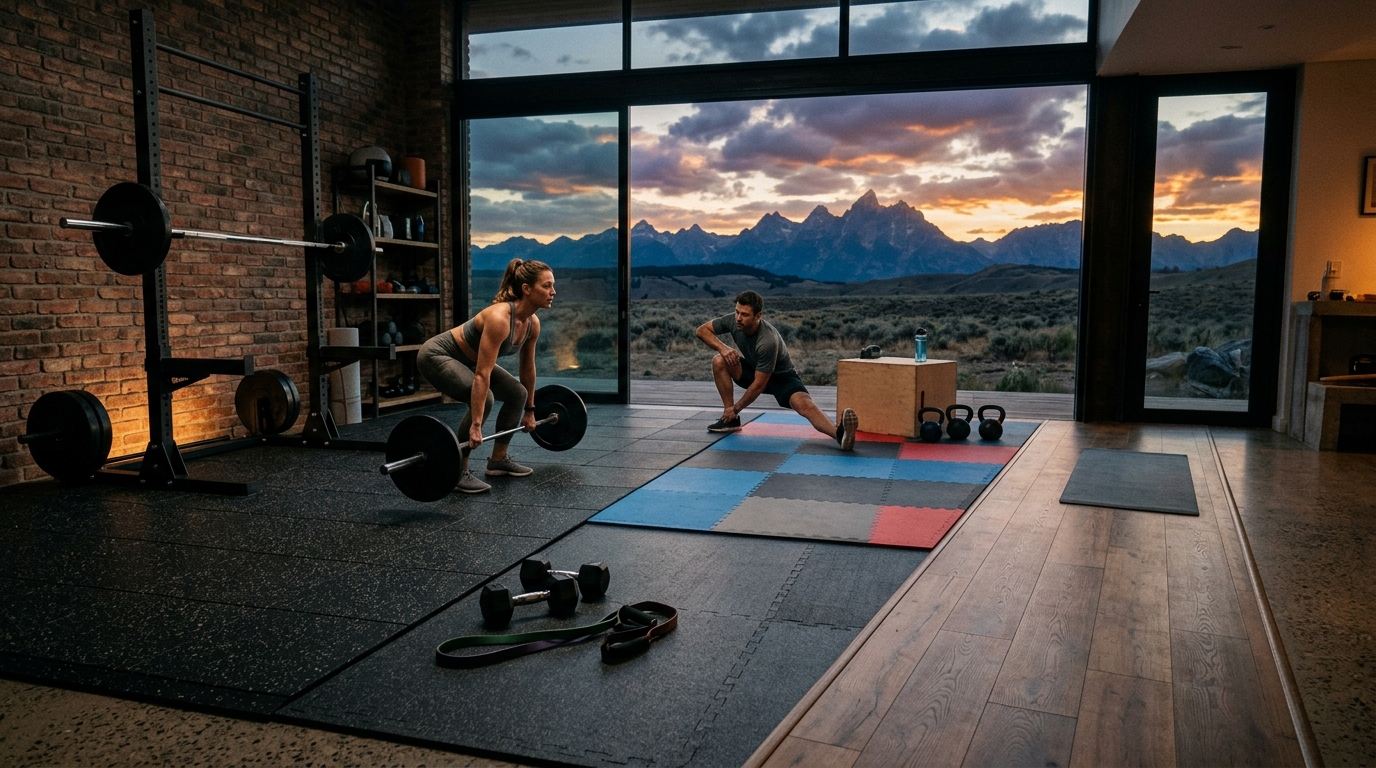
Rubber flooring is the best gym flooring for home setups in 2026, with interlocking rubber tiles leading the pack for their durability, easy installation, and consistent performance. Living.Fit Interlocking Rubber Tiles offer the best overall combination of quality and value, while horse stall mats provide an excellent budget alternative at 3/4-inch thickness. Foam tiles work well for lighter training but lack the durability serious lifters need for heavy compound movements.
Best Home Gym Flooring Options (Ranked)
1. Living.Fit Interlocking Rubber Tiles
Best overall choice for consistent, low-odor flooring that handles heavy training. These tiles scored highest across nearly every category in 2026 testing, offering superior consistency and installation options compared to alternatives.
2. Horse Stall Mats (3/4-inch)
Most popular budget option among serious lifters. Thick rubber construction at 3/4-inch provides excellent protection for heavy deadlifts and Olympic lifts at a fraction of the cost of specialized gym tiles.
3. Rubber Gym Floor Rolls
Best for covering large areas with minimal seams. Solid rubber construction in roll format reduces installation time for full room coverage, though requires more precise measuring.
4. Interlocking Foam Tiles
Best for light training and stretching areas. Soft, cushioned surface works well for bodyweight exercises and yoga but compresses under heavy weights.
5. Rubber Gym Mats (Individual)
Best for targeted coverage under specific equipment. Heavy-duty mats designed for placement under squat racks, benches, or cardio equipment without full floor coverage.
6. Vinyl Composite Tiles
Best for mixed-use spaces that need to look finished. More expensive option that provides gym functionality while maintaining a polished appearance for multi-purpose rooms.
7. Cork Flooring
Best eco-friendly option for lighter training. Natural material with antimicrobial properties, though less durable under heavy weights compared to rubber alternatives.
Comparison Table
| Flooring Type | Thickness | Weight Capacity | Installation | Price Range | Best For |
|---|---|---|---|---|---|
| Living.Fit Rubber Tiles | 8mm-20mm | Heavy lifting | Interlocking | $$$ | All training |
| Horse Stall Mats | 3/4 inch | Heavy lifting | Lay flat | $ | Budget builds |
| Rubber Rolls | 1/4-1/2 inch | Medium-heavy | Adhesive/loose | $$ | Large areas |
| Foam Tiles | 1/2-1 inch | Light training | Interlocking | $ | Bodyweight |
| Individual Mats | 1/2-3/4 inch | Heavy lifting | Placement | $$ | Equipment zones |
| Vinyl Composite | 6-8mm | Medium training | Click-lock | $$$$ | Mixed-use |
| Cork Flooring | 6-12mm | Light-medium | Adhesive | $$$ | Eco-conscious |
How to Choose the Right Gym Flooring
Consider your training style first. Heavy compound movements like deadlifts and Olympic lifts require thicker, more durable materials like 3/4-inch horse stall mats or quality rubber tiles. Bodyweight training and stretching can work well with foam options.
Factor in your subfloor protection needs. Concrete garage floors need serious impact protection, while finished basement floors might only need moderate cushioning. Thicker materials provide better protection but cost more.
Think about installation complexity. Interlocking tiles offer the easiest installation and future modifications, while rolls require more precise measuring but fewer seams. Horse stall mats are heavy but simple to place.
Budget for your actual space requirements. Calculate square footage carefully—flooring costs add up quickly. Horse stall mats typically offer the best value per square foot for serious training.
Plan for odor and off-gassing. Cheaper rubber products may have strong odors initially. Higher-quality options like Living.Fit tiles are specifically manufactured to minimize smell.
Why Rubber Flooring Works Best for Home Gyms
Rubber flooring has become the gold standard for home gyms because it supports a wide range of training styles while providing essential protection for both your equipment and subfloor. The material's natural shock absorption reduces noise transmission—crucial for garage gyms or basement setups where neighbors or family members might be affected.
For lifters tracking their training progression with apps like Kenso, consistent flooring provides the stable platform needed for proper form and reliable performance metrics. Uneven or unstable surfaces can affect lift execution and make it harder to track true progression over time.
The durability factor cannot be overstated. Quality rubber flooring withstands thousands of weight drops, barbell rolls, and equipment placement changes without degrading. This longevity makes the initial investment worthwhile compared to replacing cheaper materials every few years.
Installation Considerations
Most rubber flooring options require minimal preparation beyond ensuring a clean, level surface. Interlocking tiles snap together without adhesives, making them ideal for renters or those who might relocate their gym setup.
Horse stall mats, while heavy at 100+ pounds each, simply lay flat and rely on their weight to stay in place. The main challenge is transportation and initial positioning—consider having them delivered or bringing a truck for pickup.
For permanent installations, rubber rolls with adhesive backing provide the most seamless appearance but require more commitment. This option works best when you're certain about your gym layout and don't anticipate major changes.
Maintenance and Longevity
Rubber flooring requires minimal maintenance beyond regular cleaning with mild soap and water. Avoid oil-based cleaners that can break down the rubber over time.
Quality rubber flooring should last 10+ years under normal home gym use. Signs it's time to replace include permanent indentations, cracking, or pieces that no longer lay flat. When tracking your training sessions in Kenso, note any flooring issues that might affect your performance or safety.
Budget-Friendly Alternatives
Horse stall mats remain the most popular budget option among serious lifters for good reason. At roughly $40-50 per 4x6 foot mat, they provide professional-grade protection at a fraction of specialized gym flooring costs.
Tractor Supply Company stall mats are particularly well-regarded in the lifting community. These 3/4-inch thick mats handle heavy deadlifts and equipment without issue, though they may have a stronger rubber odor initially compared to premium options.
For those on extremely tight budgets, even used horse stall mats can work well if properly cleaned and inspected for damage.
Premium Options Worth Considering
While horse stall mats dominate budget discussions, premium options like Living.Fit tiles offer advantages worth the extra cost for some lifters. Better odor control, more consistent thickness, and superior aesthetics make them worthwhile for finished basement gyms or multi-purpose spaces.
Premium rubber flooring also tends to have better edge finishing and color consistency, creating a more professional appearance that some lifters prefer for their dedicated training space.
What thickness of gym flooring do I need for heavy lifting?
For heavy compound movements like deadlifts and Olympic lifts, 3/4-inch thickness provides optimal protection for both your subfloor and equipment. This thickness effectively absorbs impact from dropped weights while maintaining stability for lifting. Thinner options (1/4 to 1/2 inch) work for moderate training but may not provide adequate protection for consistently heavy loads.
Are horse stall mats actually good for home gyms?
Yes, horse stall mats are excellent for home gyms and represent the most popular flooring choice among serious lifters. Their 3/4-inch thickness, durability, and budget-friendly pricing make them ideal for heavy training. The main drawbacks are initial rubber odor and weight (100+ pounds per mat), but these are minor compared to their performance benefits.
How much gym flooring do I need for a home setup?
Calculate your actual training area rather than the entire room—you typically need flooring where you'll be lifting, not storage areas. A basic setup might need 64-100 square feet (8x8 to 10x10 area), while a full garage gym could require 200+ square feet. Always add 10% extra for cuts and future expansion.
Can I install gym flooring over concrete?
Yes, rubber gym flooring works excellently over concrete and actually provides essential benefits like moisture protection and temperature insulation. Concrete is an ideal subfloor for gym flooring because it's stable and level. Just ensure the concrete is clean and dry before installation.
What's the difference between gym flooring and regular rubber mats?
Gym-specific flooring is typically thicker (1/2 to 3/4 inch), designed for heavy impact, and manufactured with better edge finishing for seamless installation. Regular rubber mats are often thinner and may not withstand repeated heavy weight drops. Gym flooring also tends to have better odor control and consistent thickness across pieces.
How do I clean and maintain rubber gym flooring?
Clean rubber gym flooring with mild soap and water, avoiding oil-based cleaners that can degrade the material. Sweep or vacuum regularly to remove debris that could cause premature wear. For stubborn stains, use a soft brush with cleaning solution. Proper maintenance extends flooring life to 10+ years under normal use.
Should I get interlocking tiles or solid mats for my home gym?
Interlocking tiles offer easier installation, future modifications, and replacement of damaged sections, making them ideal for evolving gym setups. Solid mats (like horse stall mats) provide seamless surfaces better for rolling barbells and cost less per square foot. Choose tiles for flexibility, solid mats for budget and performance.
Is foam flooring suitable for strength training?
Foam flooring works well for bodyweight exercises, stretching, and light training but compresses under heavy weights, making it unsuitable for serious strength training. If you're tracking progression in apps like Kenso and lifting progressively heavier weights, rubber flooring provides the stable platform needed for consistent performance and safety.
Ready to set up your home gym with proper flooring? Download Kenso to track your training sessions and progression as you build consistency in your new space.
This article contains affiliate links. We may earn a small commission at no extra cost to you.