
This post contains affiliate links. We earn a small commission if you purchase through them — at no extra cost to you. We only partner with brands we'd recommend regardless. — Brendon
Even one to two alcoholic drinks measurably reduces deep and REM sleep and suppresses overnight heart rate variability, impairing the recovery athletes depend on.
If you're tracking sleep metrics, you've probably noticed that even a single drink affects your deep sleep numbers. The research helps explain why — and what it means for your training.
The Sleep Architecture Problem
Alcohol doesn't just make you drowsy. It alters your sleep architecture in ways that work against recovery.
Ebrahim et al. (2013, Alcoholism: Clinical and Experimental Research) documented that alcohol suppresses REM sleep, particularly in the first half of the night, and disrupts sleep homeostasis — the body's normal regulation of sleep depth and continuity. The result is less of the restorative sleep your muscles need and more fragmented sleep later in the night.
The mechanism is straightforward: as alcohol metabolizes, it disrupts the normal sleep-wake cycle, and your body prioritizes processing it over uninterrupted overnight recovery.
Heart Rate Variability Takes a Hit
If you're using HRV-related metrics to track recovery, alcohol's impact is also worth noting. Pietilä J et al. (2018, JMIR Mental Health, "Acute Effect of Alcohol Intake on Cardiovascular Autonomic Regulation During the First Hours of Sleep") found that alcohol intake reduces cardiovascular autonomic regulation — including nocturnal heart rate variability — during the early hours of sleep, with greater effects at higher doses.
For athletes training daily, lower overnight HRV is associated with incomplete autonomic recovery between sessions.
Why Adaptogens May Be Worth Exploring
This is where the research on adaptogens gets interesting. Unlike alcohol, which forces relaxation through central nervous system depression, adaptogens are studied for helping the body manage stress.
Ashwagandha has been examined in randomized controlled trials for both stress and sleep outcomes. Chandrasekhar et al. (2012, Indian Journal of Psychological Medicine) reported reductions in serum cortisol in a chronically stressed population taking ashwagandha root extract versus placebo. Salve et al. (2019, Cureus) found that 300mg of ashwagandha root extract improved sleep quality and stress measures relative to placebo. Effect sizes vary by study and population, so treat these as supportive rather than guaranteed outcomes.
L-theanine works through a different pathway. Nobre AC et al. (2008, Asia Pac J Clin Nutr, "L-theanine, a natural constituent in tea, and its effect on mental state") reported that L-theanine increases alpha brain wave activity — the relaxed-but-alert state associated with meditation — without sedative effects. The commonly studied dose is around 200mg, taken 30–60 minutes before you want to feel the effect.
One important caveat: no study has directly compared adaptogens against alcohol on sleep architecture or recovery. The adaptogen sleep evidence is still preliminary, so think of these as a different approach to stress and sleep — not a proven substitute for avoiding alcohol's recovery cost.
What This Means for Your Training
If you're serious about recovery, the trade-off is worth considering. Alcohol reduces the deep and REM sleep phases tied to muscle repair and hormonal recovery, even at low doses.
Adaptogens work differently. Rather than forcing relaxation through nervous system depression, they're studied for helping the body handle stress, which may support sleep. Keep in mind the evidence here is early and hasn't been tested head-to-head against cutting alcohol.
Sleep matters for performance. Mah et al. (2011, Sleep) found that extending sleep in collegiate basketball players improved sprint times and shooting accuracy. Note what this shows: the performance gains came from adding sleep, not from avoiding alcohol specifically — it's a reminder that sleep quantity and quality are trainable variables, scoped to that athlete population.
The Practical Approach
This isn't an argument for never drinking. But if you're tracking metrics and wondering why your recovery numbers stay suppressed, try eliminating alcohol for two weeks and watch your data.
If you train with Kenso, your recovery context comes from Apple Health: Kenso surfaces the sleep, recovery score, and related metrics that Apple Health provides, so you can see how a weekend of drinking lines up against your training log. Note that the recovery score itself originates from Apple Health and your connected wearables — Kenso doesn't generate it, nor does it measure sleep stages or HRV directly. Run a two-week experiment and let the numbers guide you.
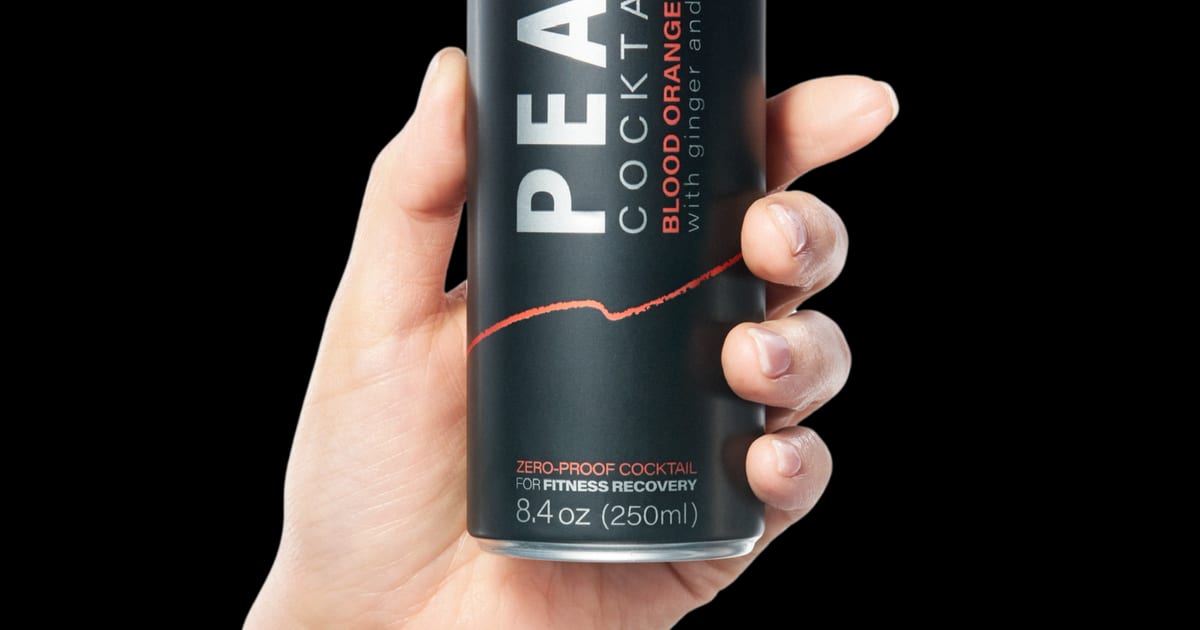
If you want to try the adaptogen route: Kenso has an affiliate partnership with Peak Cocktails, zero-proof cocktails made with ashwagandha, l-theanine, and cordyceps. Code KENSOFIT20 gets 20% off your first order. Per the caveats above, check the per-can dosages against the studied doses before relying on any functional claim.