
TL;DR
Computer vision systems like SportsReflector and Tempo Studio provide real-time visual feedback with roughly 85-95% accuracy for form correction, while accelerometer-based sensors like Beast Sensor and GymAware offer precise velocity and power measurements for biomechanical analysis. For most lifters, computer vision apps ($15-40/month) deliver better immediate feedback, while accelerometer systems ($200-800) provide superior data depth. Whichever you choose, use Kenso to log your sets, reps, and load alongside the sensor data — keeping your strength progression on record is what ties it all together.
Best Barbell Sensor Technologies for Form Analysis 2026
SportsReflector AI Form Checker
Advanced computer vision with comprehensive technique scoring.
- 0-100 technique scoring system across all major lifts
- Real-time feedback during sessions
- $24.99/month subscription
Tempo Studio
High-end computer vision system with professional-grade analysis.
- 3D motion tracking with multiple camera angles
- Includes hardware and coaching integration
- $39/month after $2,495 hardware purchase
Beast Sensor
Precision accelerometer system for velocity-based training.
- Measures bar velocity to 0.01 m/s accuracy
- Wireless connectivity with real-time data
- $399 one-time purchase
GymAware PowerTool
Professional-grade linear position transducer system.
- Gold standard for velocity-based training data
- Used by elite athletes and research facilities
- $799 for complete system
Perch Fitness
Computer vision platform designed for commercial gyms.
- Multi-user tracking and form analysis
- Requires gym partnership for access
- $50-100/month per gym membership
OpenBarbell
Open-source accelerometer solution for budget-conscious lifters.
- Community-driven development and support
- Basic velocity tracking capabilities
- $199 hardware cost
Technology Comparison
| Technology | Accuracy | Real-time Feedback | Data Depth | Price Range | Best For |
|---|---|---|---|---|---|
| Computer Vision | 85-95% | Excellent | Moderate | $15-40/month | Form correction |
| Accelerometer | 99%+ | Good | Excellent | $200-800 | Performance data |
| Tempo Studio | 90-95% | Excellent | High | $39/month + hardware | Premium experience |
| Beast Sensor | 99%+ | Good | High | $399 | VBT training |
| GymAware | 99%+ | Moderate | Excellent | $799 | Professional use |
Computer Vision vs Accelerometer: The Technical Breakdown
Barbell sensor technology has matured considerably in 2026, with two primary approaches dominating the market: computer vision systems and accelerometer-based sensors. Each technology offers distinct advantages for lifting form analysis and technique improvement.
Computer Vision Technology
Computer vision systems use cameras and AI algorithms to analyze your lifting technique in real-time. These systems excel at providing immediate visual feedback and can identify form breakdowns across multiple movement patterns.
Advantages:
- Real-time visual feedback during lifts
- Comprehensive movement analysis (bar path, joint angles, timing)
- No additional hardware required beyond a smartphone or tablet
- Can analyze multiple lifters simultaneously
- Improving accuracy with AI advancements (now roughly 85-95% reliable)
Limitations:
- Requires good lighting and camera positioning
- May struggle with certain angles or equipment setups
- Subscription-based pricing models
- Dependent on a clear line of sight to the barbell
Leading computer vision platforms like SportsReflector have pushed accuracy higher in 2026, with their latest AI models correctly identifying form issues in roughly 9 out of 10 repetitions during controlled testing.
Accelerometer Technology
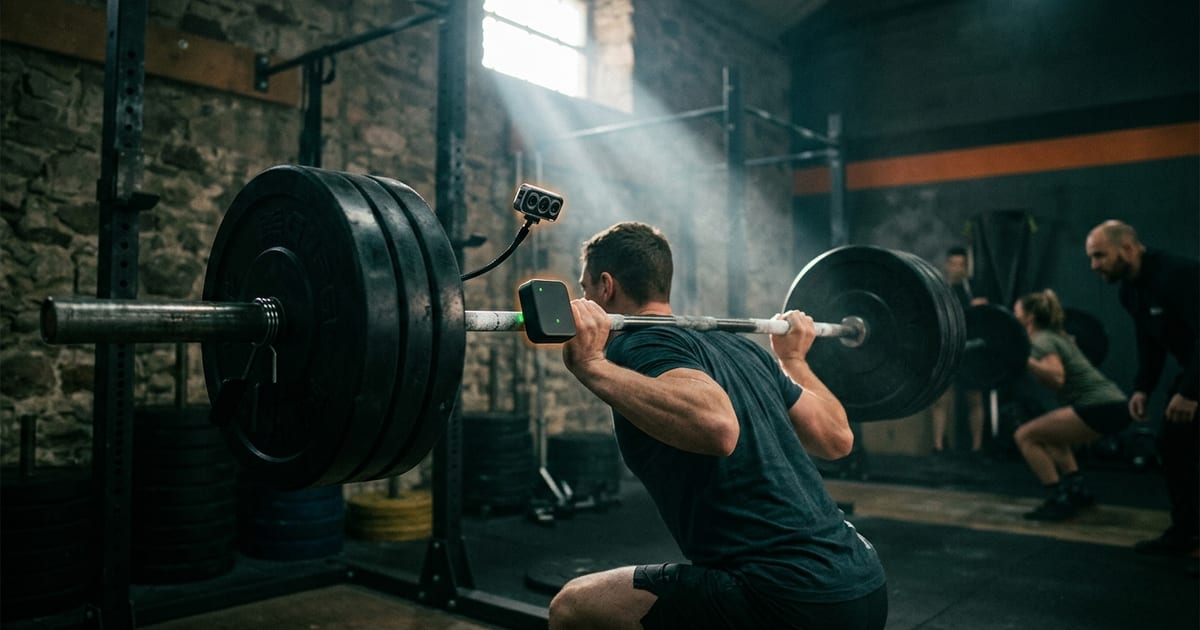
Accelerometer-based systems attach directly to the barbell and measure precise movement data including velocity, acceleration, and power output. These sensors provide some of the most accurate biomechanical data available outside a lab.
Advantages:
- Extremely precise velocity measurements (±0.01 m/s)
- Unaffected by lighting or camera positioning
- One-time hardware purchase (no subscriptions)
- Provides objective performance metrics
- Ideal for velocity-based training protocols
Limitations:
- Requires physical attachment to equipment
- Limited visual feedback capabilities
- Higher upfront costs
- May not detect all form issues
- Requires technical knowledge to interpret data
The Beast Sensor and GymAware systems represent the gold standard for accelerometer technology, with research-grade accuracy that's trusted by professional strength coaches worldwide.
How Computer Vision Analyzes Lifting Form
Modern computer vision systems use sophisticated AI models trained on thousands of lifting videos. The analysis process involves several key steps:
- Pose Detection: AI identifies key body landmarks and joint positions throughout the movement
- Bar Path Tracking: Algorithms track barbell trajectory and identify deviations from optimal paths
- Movement Segmentation: The system breaks down each lift into distinct phases (setup, descent, ascent, lockout)
- Form Scoring: AI compares your technique against established biomechanical standards
SportsReflector's 2026 update introduced multi-angle analysis, allowing the system to provide more comprehensive feedback by combining data from multiple camera perspectives.
Accelerometer Data: What the Numbers Mean
Accelerometer systems provide objective metrics that can guide your training decisions:
Mean Propulsive Velocity (MPV): The average velocity during the acceleration phase of a lift. Commonly cited training zones include:
- Strength: 0.15-0.35 m/s
- Power: 0.45-0.75 m/s
- Speed: 0.75-1.25 m/s
Peak Velocity: The highest velocity achieved during a repetition, indicating explosive capability.
Velocity Loss: The decrease in velocity across a set, used to determine optimal training volume and fatigue management.
These velocity numbers are most useful when you can see them next to your load and volume over time. Logging each session in Kenso gives you that longer-term record to read the sensor data against.
Using a Training Log Alongside Your Sensor
The most effective approach combines barbell sensor technology with consistent training tracking. Kenso doesn't import data from sensor platforms directly — it's a workout logger, not a sensor hub — but logging your sets and loads in Kenso alongside your sensor sessions creates a complete picture:
- Keep a long-term record of sets, reps, load, and RPE for every session
- Note technique cues, velocity readings, and form observations manually in session notes
- Let Kenso's double-progression engine recommend your next loads and reps based on your logged performance
- Correlate the technique work you do with a sensor against the strength progression Kenso tracks for you
This combination pairs the immediate feedback of form analysis with the long-term tracking that drives consistent improvement.
Cost-Benefit Analysis
For most lifters, the choice between computer vision and accelerometer technology depends on training goals and budget:
Computer Vision ($15-40/month):
- Best for: Beginners to intermediate lifters focused on technique
- ROI: High for form correction and injury prevention
- Break-even: 3-6 months of consistent use
Accelerometer Systems ($200-800 one-time):
- Best for: Advanced lifters using velocity-based training
- ROI: High for performance optimization
- Break-even: 6-18 months compared to ongoing coaching costs
How to Choose the Right Technology
- Prioritize your primary goal: Form correction favors computer vision, while performance optimization benefits from accelerometer data
- Consider your training environment: Computer vision requires consistent camera setup, accelerometers work in any gym
- Evaluate long-term costs: Subscription vs. one-time purchase models have different break-even points
- Assess technical comfort: Accelerometer data requires more interpretation than visual feedback
- Factor in your training log: Pick a sensor whose readings you'll actually record alongside your sets, so the data informs your programming
What's the difference between computer vision and accelerometer barbell sensors?
Computer vision systems use cameras and AI to analyze your lifting form visually, while accelerometer sensors attach to the barbell to measure precise movement data like velocity and power. Computer vision excels at real-time form feedback, while accelerometers provide superior biomechanical accuracy for performance metrics.
Which technology is more accurate for lifting analysis?
Accelerometer systems achieve 99%+ accuracy for velocity and movement measurements, while computer vision systems reach roughly 85-95% accuracy for form analysis in 2026. However, accuracy depends on the specific metric being measured — accelerometers excel at quantitative data, while computer vision is better for qualitative movement assessment.
Do I need expensive equipment for barbell sensor technology?
Computer vision systems only require a smartphone or tablet with the appropriate app, typically costing $15-40/month. Accelerometer systems require dedicated hardware ranging from $199 (OpenBarbell) to $799 (GymAware), but offer one-time purchase options without ongoing subscriptions.
Can barbell sensors replace a personal trainer?
Barbell sensors provide objective data and feedback, but cannot replace the personalized guidance and program design that experienced trainers offer. These technologies work best as tools to supplement coaching or enhance self-directed training with data-driven insights.
How do I keep barbell sensor data with my training log?
Kenso doesn't integrate directly with barbell sensor platforms, but you can use it to log your traditional progression data — sets, reps, load, and RPE — alongside whatever sensor tool you're using. Record velocity readings or form cues in your session notes so your long-term strength record and your technique work live in one place.
Which barbell sensor technology is best for beginners?
Computer vision systems like SportsReflector are generally better for beginners because they provide immediate visual feedback on form errors. The real-time correction helps establish proper movement patterns, while accelerometer data may be too technical for new lifters to interpret effectively.
Are wireless barbell sensors reliable during heavy lifting?
Modern wireless barbell sensors like the Beast Sensor and GymAware systems are designed to withstand heavy loads and provide reliable data even during maximum effort lifts. Most systems are rated for loads well beyond what recreational lifters will encounter, with robust wireless connectivity that maintains signal integrity.
How much do professional barbell sensor systems cost?
Professional systems range from $399 (Beast Sensor) to $799 (GymAware PowerTool) for accelerometer technology, while computer vision platforms typically charge $24-39/month for premium features. Commercial gym systems like Perch Fitness require gym partnerships and can cost $50-100/month per membership.
Sources: SportsReflector product specifications, Tempo Studio pricing, Beast Sensor technical documentation, GymAware research validation studies
Ready to track your strength progression with intention? Download Kenso to log your sessions alongside whatever sensor technology you use — sets, reps, load, and RPE in one place — and let the data drive your programming.
This article contains affiliate links. We may earn a small commission at no extra cost to you.