
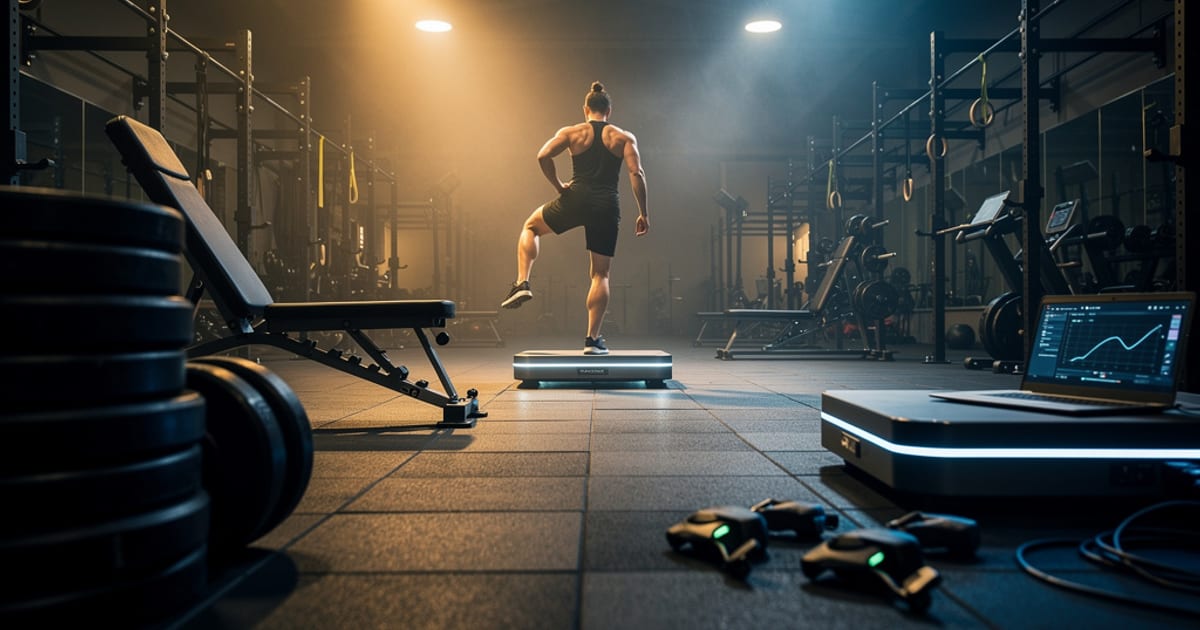
What's the Best Way to Track Strength Asymmetries?
The most effective way to track strength asymmetries is to compare each side's performance on the same unilateral exercises over time — testing one limb at a time and recording weight, reps, and perceived difficulty. Lab tools like force plates and VALD force frames give the most precise bilateral measurements, but for practical gym use, structured single-side testing reliably detects the left-right imbalances that matter for your training.
Strength asymmetries between your left and right sides are more common than you might think. While perfect symmetry isn't necessary for most lifters, significant imbalances can increase injury risk and limit your training potential. Understanding how to properly track these asymmetries gives you the data needed to address them systematically.
Understanding Strength Asymmetries
Strength asymmetries occur when one side of your body produces significantly more force than the other during similar movements. These imbalances can develop from:
- Previous injuries that favored one side
- Sport-specific training patterns
- Daily activities that emphasize one side
- Natural anatomical differences
- Compensation patterns from other movement restrictions
Research suggests that meaningful bilateral force asymmetries are associated with elevated non-contact injury risk, particularly for the lower back — though the precise threshold varies across studies. For most lifters, the practical takeaway is consistent: muscular symmetry becomes a real concern primarily when an imbalance causes pain or limits function, not when minor side-to-side differences show up on a single test.
High-Precision Methods for Tracking Asymmetries
Force Plate Technology
Force plates represent the gold standard for strength asymmetry detection. These platforms measure ground reaction forces with exceptional precision, allowing you to:
- Quantify exact force production differences between sides
- Track changes in asymmetry over time
- Identify compensation patterns during bilateral movements
- Monitor rehabilitation progress objectively
VALD technology has emerged as a leader in this space, offering force frame systems that can uncover strength asymmetries and guide rehabilitation protocols. These systems provide detailed left versus right comparisons during various movement patterns. The trade-off is access: force plates and force frames generally live in labs, clinics, and well-equipped performance centers rather than commercial gyms.
Vertical Jump Force Testing
Vertical jump force testing offers a practical way to assess bilateral strength asymmetry in athletes when force-plate equipment is available. This method evaluates force production during explosive movements, providing insights into:
- Peak force differences between legs
- Rate of force development asymmetries
- Landing mechanics variations
- Power output imbalances
Practical Gym-Based Assessment Methods
Unilateral Strength Testing
For most lifters, unilateral strength testing provides accessible asymmetry detection without specialized equipment. Effective exercises include:
Single-Leg Exercises:
- Bulgarian split squats
- Single-leg Romanian deadlifts
- Step-ups with controlled tempo
- Single-leg glute bridges
Single-Arm Movements:
- Single-arm dumbbell presses
- Single-arm rows
- Unilateral farmer's walks
- Single-arm overhead carries
When performing these assessments, track the weight, repetitions, and perceived difficulty for each side. Significant differences (commonly cited as roughly 10-15%) warrant attention, though treat these figures as practical rules of thumb rather than hard cutoffs.
Functional Movement Patterns
Functional assessments evaluate how asymmetries manifest during compound movements:
Overhead Squat Assessment: Observe for lateral shifts, uneven hip positioning, or asymmetrical shoulder mobility during bodyweight squats with arms overhead.
Single-Leg Balance Tests: Time how long you can maintain single-leg balance with eyes closed. Significant differences between sides may indicate proprioceptive or strength imbalances.
Gait Analysis: Simple observational assessment of walking or running patterns can reveal asymmetries in stride length, ground contact time, or foot positioning.
Technology-Assisted Tracking Methods
Smartphone Applications and Wearables
Modern fitness tracking technology can help identify asymmetries through:
- Accelerometer data during unilateral movements
- Video analysis of movement patterns
- Step counting and gait pattern recognition
- Trends in per-side performance recorded over multiple sessions
Apps like Kenso help you systematically log unilateral training data — weight, reps, and RPE for each side — so you can monitor progression and spot persistent imbalances over time.
Pedal Force Systems
For lower body assessment, cycling pedal systems provide functional evaluation during the pedal stroke. These systems measure:
- Left versus right power output
- Pedal stroke efficiency differences
- Force application patterns
- Temporal asymmetries in pedal cycles
Creating an Asymmetry Tracking Protocol
Baseline Assessment
Establish your baseline asymmetry profile through:
- Bilateral strength testing in major movement patterns
- Unilateral strength assessment for each side independently
- Functional movement screening to identify compensation patterns
- Documentation of any pain or discomfort patterns
Regular Monitoring
Implement consistent tracking by:
- Testing asymmetries every 4-6 weeks
- Using the same exercises and protocols each time
- Recording environmental factors (fatigue, recent training)
- Tracking both absolute and relative differences
Kenso's training log makes it easy to maintain consistent records of unilateral exercises, helping you spot trends in asymmetry development over time.
Progressive Correction Strategies
When asymmetries are identified:
Immediate Adjustments:
- Prioritize weaker side training
- Use unilateral exercises as accessories
- Focus on movement quality over load
- Address mobility restrictions
Long-term Monitoring:
- Track asymmetry changes monthly
- Adjust training volume based on progress
- Consider professional assessment for persistent imbalances
- Monitor for pain or compensation patterns
When to Seek Professional Assessment
Consider professional evaluation when:
- Asymmetries are large and consistent across tests
- Pain accompanies the imbalance
- Functional limitations develop
- Self-assessment methods show conflicting results
- Previous injuries may be contributing factors
Physical therapists and sports medicine professionals can provide advanced assessment tools and targeted intervention strategies.
Integration with Training Programs
Effective asymmetry tracking should integrate seamlessly with your existing training routine. Use your tracking data to:
- Inform exercise selection and programming
- Adjust training loads between sides
- Monitor rehabilitation progress
- Prevent compensation pattern development
The key is consistent measurement and systematic progression. Kenso helps you maintain this consistency by providing structured logging for both bilateral and unilateral training sessions — and its double-progression engine recommends weight and rep adjustments per exercise as you go, so each side's accessory work keeps moving forward.
Tracking strength asymmetries takes patience and a systematic approach. Focus on meaningful differences rather than perfect symmetry, and use your data to guide intelligent training decisions instead of obsessing over minor variations.
What percentage of strength asymmetry is considered normal?
Side-to-side differences of roughly 10-15% are commonly treated as acceptable for most activities. Beyond about 15-20%, intervention may be worthwhile to reduce injury risk and optimize performance. Treat these as general guidelines — context, pain, and function matter more than hitting an exact number.
How often should I test for strength asymmetries?
Test every 4-6 weeks during regular training phases, or more frequently (weekly) if you're actively addressing a known imbalance or recovering from injury.
Can strength asymmetries fix themselves over time?
Minor asymmetries may improve with balanced training, but significant imbalances typically require targeted intervention through unilateral exercises and corrective strategies.
Should I stop training if I discover a strength asymmetry?
No, but modify your training to address the imbalance. Focus on unilateral exercises and consider reducing loads on bilateral movements until the asymmetry improves.
What's the difference between strength and mobility asymmetries?
Strength asymmetries involve force production differences, while mobility asymmetries relate to range of motion limitations. Both can contribute to movement dysfunction and should be assessed separately.
Ready to start tracking your training with the consistency needed to identify and address strength asymmetries? Download Kenso and build the systematic, per-side approach that leads to balanced, sustainable strength development.