
What's the Best Gym Shoe Sole Grip Pattern for Heavy Lifts?
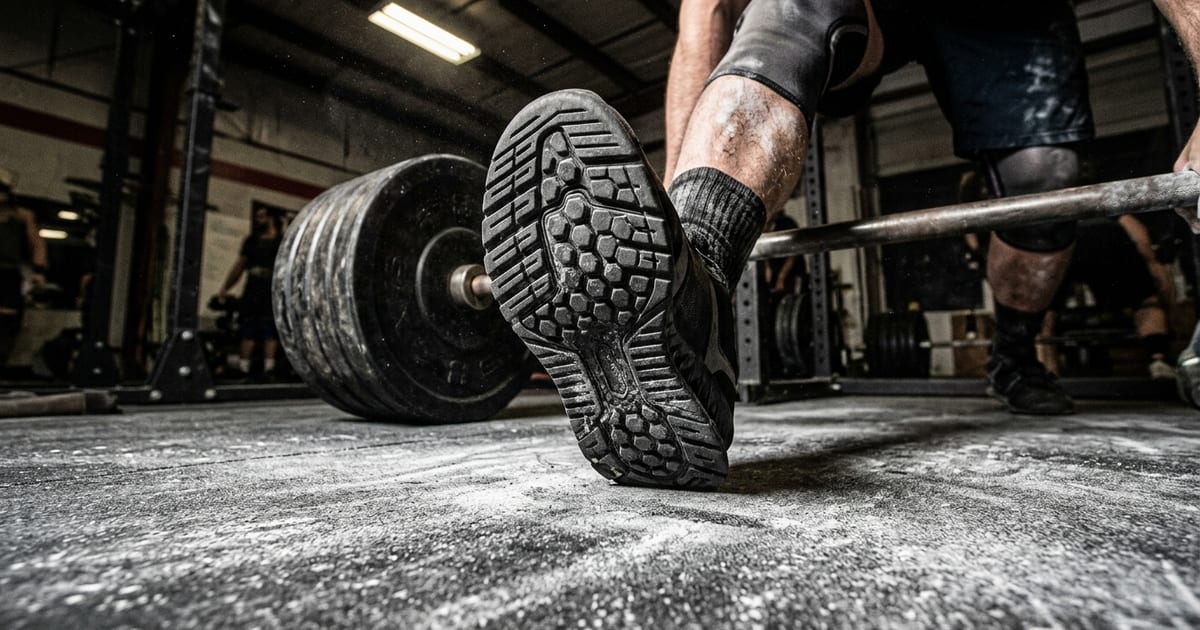
For heavy lifts, sole firmness and flatness matter more than the specific tread shape. A flat, firm, low-compression sole on a grippy gym surface gives you the most stable platform. Tread patterns like herringbone, zig-zag, or diagonal can all provide adequate multidirectional grip, but there's no strong evidence that one shape is definitively superior—so prioritize a firm, flat sole and a solid floor over chasing a particular pattern.
How Sole Grip Patterns Affect Lifting Performance
Your gym shoe sole influences how efficiently force transfers from your body to the ground. When you're pulling heavy or squatting under load, every point of contact contributes to a stable base. That said, the firmness and flatness of the sole, plus the gym surface itself, tend to matter more than the exact tread geometry.
A few common patterns:
- Herringbone patterns offer multidirectional grip. The angled grooves engage the floor across several directions.
- Zig-zag patterns channel grip along wave-like grooves and provide traction across surfaces.
- Diagonal treads are common on athletic shoes and aim to balance grip across movement planes.
In practice, these distinctions are loose. There isn't strong published evidence ranking one tread shape as definitively "best" for any specific lift or stance, so it's misleading to map a given pattern to a particular movement (e.g., zig-zag for conventional deadlifts, herringbone for sumo). Any firm, flat, multidirectional outsole on a grippy floor will resist slipping during squats and deadlifts. Treat tread shape as a minor factor, not a prescription.
It's also worth noting that many dedicated weightlifting/squat shoes don't use aggressive multidirectional tread at all—they pair a raised, firm heel with a flat, smooth or lightly textured outsole. For deadlifts, many lifters go the opposite direction and pull barefoot or in flat, thin-soled shoes on a grippy platform to minimize the distance the bar travels and maximize ground feel. In both cases, sole firmness, flatness, and the surface underfoot do more work than the tread "pattern."
Sole Design Features That Maximize Stability
Effective lifting shoes tend to share specific characteristics:
- Firm rubber compound: Softer soles compress under load, reducing stability
- Shallow tread depth: Deep lugs can create instability on flat gym floors
- Flat, stable profile: A flat (or wedge-style raised heel for squats) sole keeps your base predictable
- Minimal cushioning: Excessive midsole foam reduces ground feel and power transfer
The Nike Free Metcon 6 is one example of a firm, low-profile training shoe often used for lifting. Check the manufacturer's current description for its intended use before buying.
When Stable Footing Matters Most
Shoe and surface stability become more important during:
- Heavy deadlifts: Resisting foot slip as the bar travels up
- Back squats: Maintaining heel contact during the drive phase
- Single-leg movements: Stabilizing the planted foot during lunges or step-ups
- Olympic lifts: Securing foot position during explosive movements
Logging your sessions with an app like Kenso lets you track missed lifts, RPE, and how sessions feel over time. If you notice failed reps that coincide with foot slippage rather than strength limits, that's a signal to evaluate your footwear and platform—Kenso records the data, and you interpret the cause.
Choosing a Setup for Your Training
There's no evidence-based rule matching a tread shape to a discipline, but here are some practical, commonly-followed guidelines:
Powerlifters: A firm, flat sole (or a flat lifting slipper/barefoot for deadlifts; a raised-heel squat shoe for squats) keeps your base stable. Tread shape is secondary.
Olympic lifters: A dedicated weightlifting shoe with a firm raised heel and a flat, lightly textured outsole is the common choice—not an aggressive multidirectional tread.
General strength training: A firm, flat trainer with any reasonable multidirectional outsole works well across movements.
Even the best shoe won't compensate for worn-out soles. Replace lifting shoes when the sole becomes visibly smooth, compressed, or unstable.
The Bottom Line on Sole Grip Patterns
Sole firmness, flatness, and the gym surface matter more than the specific tread shape. Multidirectional patterns generally provide adequate grip, but there's no evidence that one shape beats another for a given lift—and many serious lifters use raised-heel squat shoes with smooth outsoles or pull deadlifts barefoot on a grippy platform. Combined with a firm sole and minimal cushioning, a stable base supports progressive overload.
When you're focused on consistent progression, every detail matters—including what's under your feet. Kenso's training logs record your sets, reps, weight, RPE, energy, and rest so you have the data to review how your footwear and other variables relate to your performance.
What sole works best for deadlifts?
Many lifters pull barefoot or in flat, thin-soled shoes on a grippy platform, since a flat, firm sole keeps you close to the ground and stable. The specific tread shape matters less than having a flat, non-compressing sole and a grippy surface.
How often should I replace lifting shoes for optimal grip?
Replace lifting shoes when the sole becomes visibly worn, smooth, or compressed, since worn soles reduce grip and stability.
Do expensive lifting shoes have better grip patterns?
Not necessarily—stability depends on sole firmness, flatness, and rubber compound rather than price, though premium shoes often feature more durable materials that maintain performance longer.
Can running shoe treads work for lifting?
Running shoes typically have soft, compressible midsoles that reduce stability under load, making them less ideal for heavy compound movements—the soft cushioning is a bigger issue than the tread shape.
What's the difference between indoor and outdoor sole patterns?
Indoor gym shoes feature shallower treads optimized for flat surfaces, while outdoor patterns have deeper lugs that can create instability on smooth gym floors.
This article contains affiliate links. We may earn a small commission at no extra cost to you.