
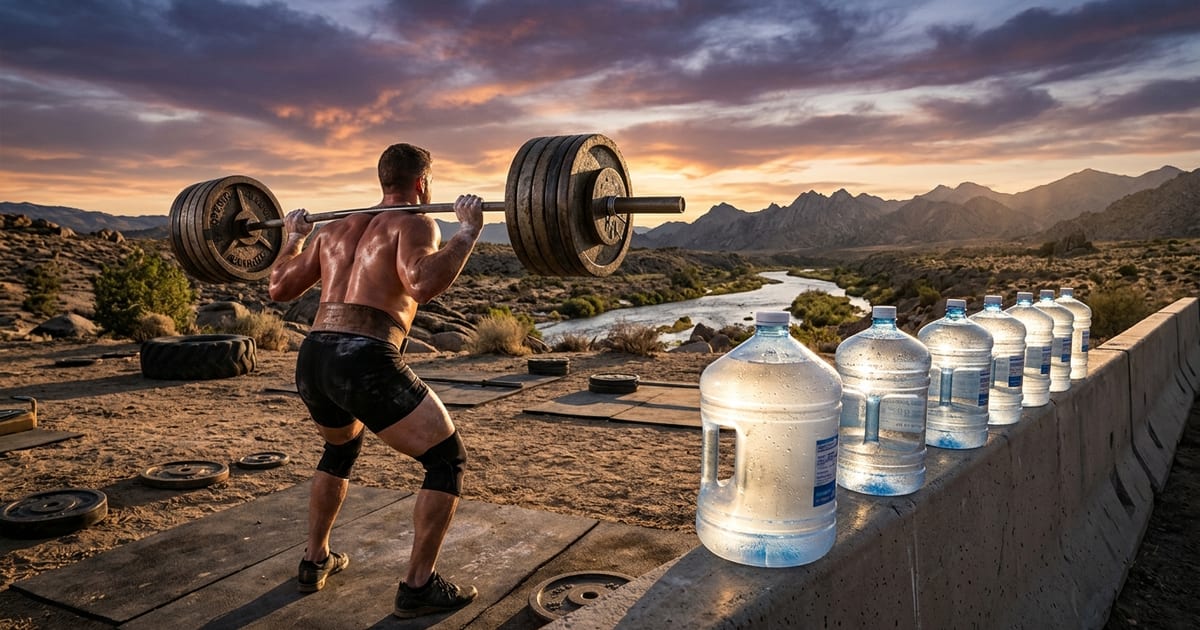
Hydration for Lifting: How Much Water Do Strength Athletes Need?
Heavy lifters generally need between 0.5 and 1 ounce of water per pound of bodyweight per day — more than the standard "eight glasses" advice accounts for. Add 16–20 ounces in the two hours before training, and aim to replace sweat losses during your session to keep bodyweight loss under 2%. That 2% threshold matters: research consistently suggests that losing more than 2% of bodyweight through sweat is associated with measurable declines in strength output and cognitive focus.
Why Standard Hydration Advice Falls Short for Strength Training
Most general hydration guidelines are built around sedentary adults or endurance athletes. Strength training creates its own fluid demands — dense muscle tissue holds more water than fat, and heavy compound work generates significant heat that your body dissipates through sweat, even in a climate-controlled gym.
Dehydration and performance are closely linked. Even mild fluid deficits can affect neuromuscular coordination, which is exactly what you don't want when you're managing a heavy squat or overhead press.
Practical Numbers to Work With
Here's a straightforward framework for most strength athletes:
Daily baseline:
- 0.5–1 oz per pound of bodyweight
- A 200 lb lifter is targeting roughly 100–200 oz (about 3–6 liters) depending on training volume, environment, and sweat rate
Pre-session:
- 16–20 oz of water 2 hours before training
- Another 8 oz in the 15–30 minutes immediately before
During training:
- 200–300 ml (roughly 7–10 oz) every 10–20 minutes
- For sessions under 45 minutes, plain water is sufficient
- For longer or higher-volume sessions, electrolyte balance becomes relevant
Post-session:
- Weigh yourself before and after if you want precision — each pound lost equals approximately 16 oz of fluid to replace
When Electrolytes Actually Matter
Electrolyte balance for lifting is often overcomplicated. For most training sessions under 60–75 minutes, water is enough. Sodium, potassium, and magnesium become more relevant when:
- Sessions exceed 75–90 minutes
- You're training in heat or humidity
- You're a heavy sweater (visible salt residue on skin or clothing is a useful indicator)
- You're in a caloric deficit and eating less overall
A simple electrolyte drink or even lightly salted food post-session covers most of this without requiring a complex supplementation protocol.
Connecting Hydration to Your Training Data
Hydration isn't isolated from your performance — it shows up in your numbers. If you're tracking your training consistently in Kenso and notice unexpected drops in rep quality or session RPE spiking without a clear load reason, fluid intake is worth auditing before you adjust the program.
Kenso's AI Coach can review your recent training history and flag patterns worth investigating. It won't tell you to drink more water, but it will surface the performance context that makes the connection visible.
The most underrated hydration habit is simply consistency. Arriving well-hydrated to every session is more valuable than any intra-workout protocol you add on top of a chronic deficit.
Build It Into the System
Hydration works best when it's a default, not a decision. Set a daily water target based on your bodyweight, build pre-session intake into your warmup routine, and log sessions in Kenso where you can track whether performance holds across a training block. The data will tell you what your thirst signals sometimes won't.
Train with intention — that includes the basics.
Start tracking your sessions with the Kenso app to build the consistent training log that makes patterns like these visible over time. Available on iOS at kensoforge.com.
Frequently Asked Questions
How much water should a strength athlete drink per day?
Most strength athletes do well targeting 0.5 to 1 ounce of water per pound of bodyweight daily. A 180 lb lifter is looking at roughly 90–180 oz, with the higher end applying on heavy training days or in warm environments.
Does dehydration actually affect lifting performance?
Research consistently suggests that fluid losses exceeding 2% of bodyweight are associated with reduced strength output and impaired focus. For a 200 lb lifter, that's just 4 lbs of water weight — less than it sounds during an intense session.
Should lifters drink electrolytes during training?
For sessions under 60–75 minutes, plain water is generally sufficient. Electrolyte drinks become more useful for longer sessions, high-sweat environments, or lifters in a caloric deficit who may be getting less sodium and potassium from food.
How do I know if I'm dehydrated before a workout?
Urine color is a reliable low-tech indicator — pale yellow suggests adequate hydration, dark yellow or amber suggests you need more fluid before training. Weighing yourself before and after sessions over time also helps you understand your personal sweat rate.
Can overhydration be a problem for lifters?
It's uncommon in strength training contexts, but drinking excessive plain water without adequate sodium intake can dilute electrolyte balance. This is more relevant for endurance athletes, but lifters doing very long sessions should include some sodium rather than relying solely on large volumes of plain water.