
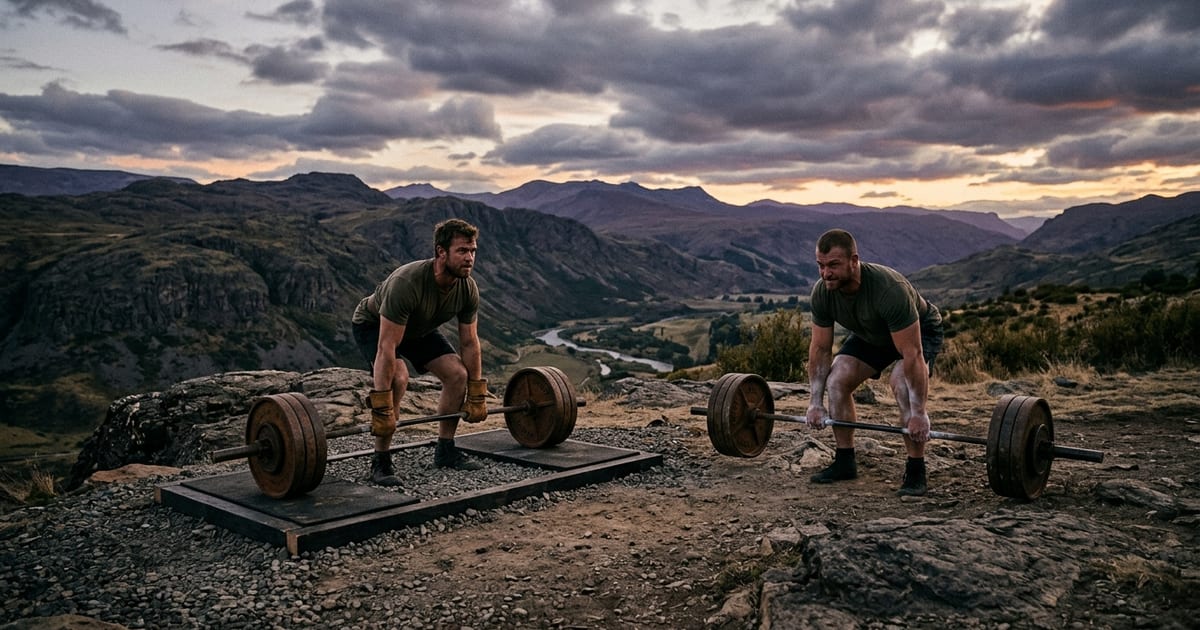
When Gloves Actually Help Your Deadlift Performance
Train deadlifts bare-handed by default for maximum grip development; reach for gloves only when grip fatigue, sweat, or torn calluses would cut a session short. Gloves provide immediate grip assistance and hand protection during high-rep sessions or when learning proper form, but bare hands offer more direct grip stimulus and bar feedback. Most experienced lifters benefit more from training bare-handed, while beginners and casual lifters often see better session consistency with quality grip gloves.
The Grip Strength Trade-Off
The main drawback of lifting gloves is the increased effective bar diameter. Even thin gloves increase the effective thickness of the bar, which can make it slightly harder to grip. This forces your forearms to work differently, and the added grip difficulty may reduce the grip-specific stimulus you'd otherwise get from a bare bar—though this reflects the mechanism of effective bar thickness rather than a proven long-term strength deficit, as grip adaptation tends to be specific to the demand placed on it.
However, gloves excel in specific scenarios:
- High-rep deadlift sessions where hand fatigue limits performance before your target muscles
- Sweaty conditions where bare hands slip despite chalk
- Learning phases when focusing on hip hinge mechanics rather than grip limits
- Back-to-back training days when torn calluses would interrupt consistency
When tracking your training in Kenso, you can log deadlift sets and RPE to spot when grip-limited reps cap your volume before your posterior chain reaches failure—a practical signal for when you might temporarily add grip accessories without compromising long-term development.
Best Grip Gloves for Deadlifting in 2025
For lifters who choose gloves, these models provide the best grip-to-bulk ratio:
Harbinger Power StretchBack Gloves offer minimal padding with maximum dexterity. The leather palm provides excellent bar contact without excessive thickness.
Ironclad General Utility Work Gloves aren't marketed for lifting but provide superior grip texture and durability compared to most gym-specific options.
When to Go Bare-Handed
Serious lifters building long-term strength should prioritize bare-handed training. Your natural grip develops proprioception—the feedback between your hands and the barbell that helps optimize lifting mechanics.
Bare hands also allow proper callus development. In practice, many lifters find well-conditioned calluses give them secure, predictable grip while maintaining natural bar feel.
Making the Right Choice for Your Training
Consider your training context when deciding between lifting gloves vs bare hands. Competition powerlifters and strength-focused athletes should train primarily bare-handed to maximize grip adaptation. Fitness enthusiasts prioritizing consistent training volume may benefit from rotating between both approaches.
Track your deadlift performance over time to identify patterns. If grip consistently limits your sessions before your target muscles fatigue, temporary glove use can maintain training quality while your natural grip catches up.
The key is intentional progression rather than defaulting to either extreme. Use Kenso to monitor how different grip approaches affect your overall deadlift development and adjust your strategy based on data, not assumptions.
What's better for building grip strength: gloves or bare hands?
Bare hands tend to provide more grip-specific stimulus because they expose your forearms to the actual bar diameter and texture, which can build functional strength that transfers to competition and daily activities. Grip adaptation is largely specific to the demand placed on the hands.
Should beginners use lifting gloves for deadlifts?
Beginners can benefit from gloves while they are still learning the movement, but should transition to bare hands once their hip-hinge technique is consistent so they can develop natural grip strength.
Do lifting gloves prevent calluses completely?
Quality lifting gloves significantly reduce callus formation, but some hand conditioning still occurs. This can be beneficial for people whose jobs require smooth hands.
When should experienced lifters consider using deadlift gloves?
Experienced lifters might use gloves during high-volume phases, when training with hand injuries, or during specific accessory work where grip isn't the target adaptation.
Can you alternate between gloves and bare hands in the same program?
Yes, many lifters use bare hands for heavy singles and doubles while wearing gloves for higher-rep accessory work, allowing both grip development and training volume.
This article contains affiliate links. We may earn a small commission at no extra cost to you.