
Drinking After Training Wrecks Your Sleep — Here's What to Do Instead
This post contains affiliate links. We earn a small commission if you purchase through them — at no extra cost to you. We only partner with brands we'd recommend regardless. — Brendon
The direct answer: alcohol consumed after a workout measurably degrades sleep quality, which impairs recovery. Even a single drink alters your sleep architecture, and since sleep is when most adaptation to training happens, that post-workout beer can quietly work against the session you just put in. The good news: the fix is simple, and you can track the effect on yourself.
Why Alcohol Undermines Post-Workout Recovery
The well-established mechanism isn't about hydration or calories — it's about sleep. Alcohol reduces REM sleep and disrupts sleep continuity, even at moderate doses. Ebrahim et al. (2013), "Alcohol and Sleep I: Effects on Normal Sleep," in Alcoholism: Clinical and Experimental Research, documents that alcohol shortens the time to fall asleep but suppresses REM sleep and fragments the second half of the night.
Because recovery and adaptation depend heavily on quality sleep, anything that degrades sleep architecture has a downstream cost on how well you bounce back from hard training. That's the verifiable takeaway here.
Track the Effect on Yourself in Kenso
You don't have to take this on faith — you can see your own data. If you use a wearable or Apple Watch that feeds sleep and recovery metrics into Apple Health, Kenso reads those values (sleep, recovery score, resting HR, and related metrics) alongside your training logs.
A simple self-experiment:
- Log your training sessions in Kenso as usual.
- Note which evenings include alcohol and which don't.
- Compare your Apple Health sleep and recovery-score data on drinking vs. non-drinking nights over a few weeks.
For most people the pattern shows up quickly. This is a correlation in your own data, not a controlled study — but it's often enough to change a habit.
Practical Guidance
- Timing matters most. The closer alcohol is to bedtime, the more it disrupts the night. If you drink, leave as many hours as possible before sleep so your body can clear it.
- Watch the dose. Effects scale with how much you drink; one is better than three.
- Don't count it as "recovery." A post-lift drink may feel like decompression, but it isn't aiding the physical recovery process.
- Keep the ritual, drop the alcohol. If the appeal is the wind-down moment more than the drink itself, a non-alcoholic alternative — sparkling water, a zero-proof drink you enjoy, tea — fills the same psychological role without the sleep cost.
A Note on "Functional" Recovery Drinks
Plenty of non-alcoholic and "adaptogen" beverages market themselves as recovery aids, often listing ingredients like ashwagandha, l-theanine, or cordyceps. Be skeptical of strong claims here: the evidence that these compounds meaningfully improve training recovery, adaptation, or "cellular energy" is limited and inconsistent, and marketing language tends to outrun the research.
If you want a non-alcoholic drink for the ritual, choose one because you like it — not because of recovery promises it can't reliably back up. The clearest, best-supported win is simply removing the alcohol.
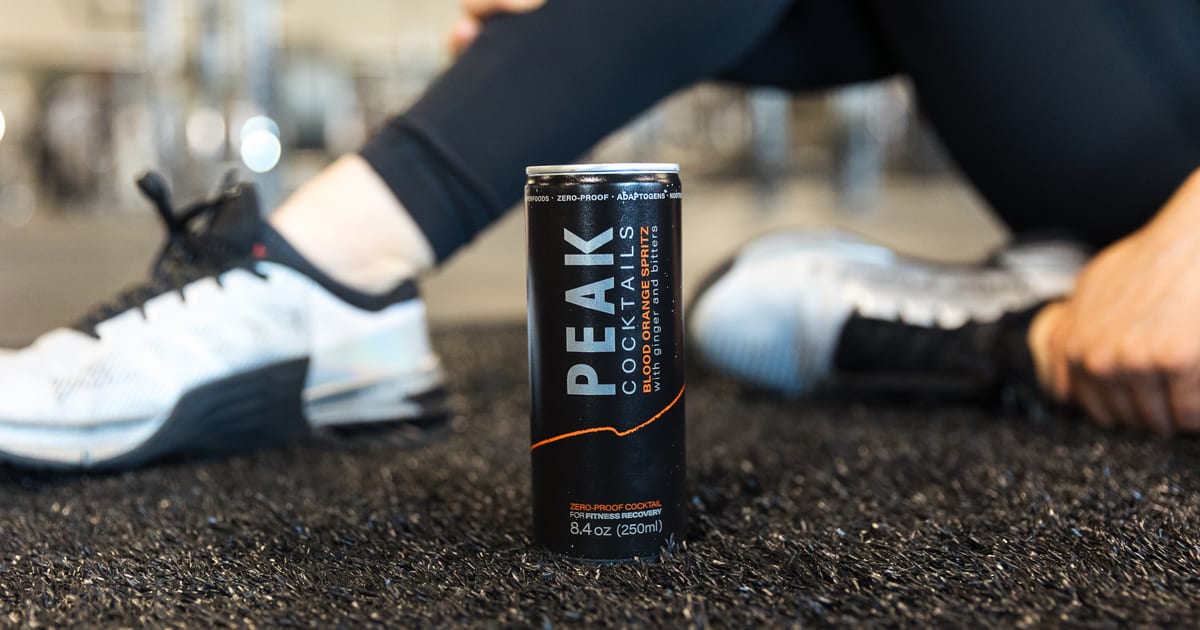
In that spirit: my own ritual replacement is Peak Cocktails, a zero-proof cocktail brand Kenso has an affiliate partnership with. I drink them because they taste like an actual cocktail — treat the adaptogen ingredients as a bonus at best, per the caveats above. Code KENSOFIT20 gets 20% off your first order.
FAQ
Does one drink really affect recovery? Even a single drink can reduce REM sleep and fragment your sleep, per Ebrahim et al. (2013). The impact is larger with more alcohol and with drinking closer to bedtime.
How long before bed should I stop drinking? There's no perfect number, but the more time between your last drink and sleep, the less disruption. Earlier and smaller is better.
Can I see the effect in Kenso? If your sleep and recovery data flow into Apple Health, Kenso displays them next to your training logs, so you can compare drinking vs. non-drinking nights yourself.
Do adaptogen drinks help recovery? The evidence is limited and doesn't clearly support strong recovery or "cellular energy" claims. Treat them as a beverage preference, not a recovery tool.