
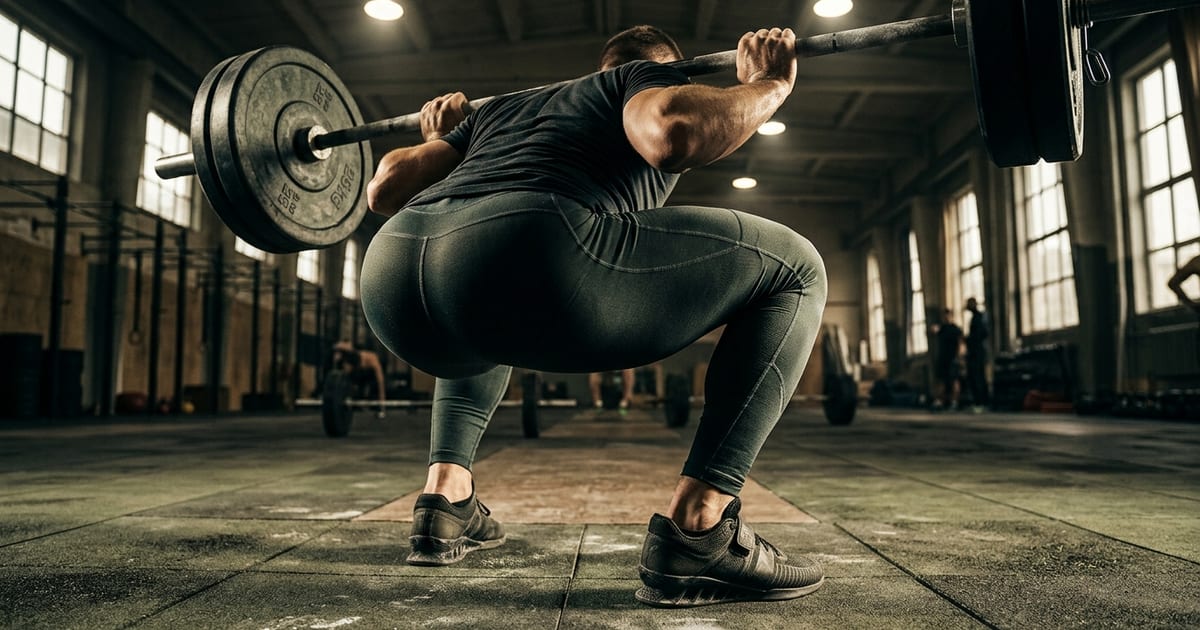
The best compression pants for squats in 2026 are the Alo High-Waist Airlift Legging for women and the 2XU Men's Core Compression Tights for men. Both combine a high-stretch fabric, a rise that stays put under a belt, and a fit that works with knee sleeves. For squatting, three specs matter more than brand: a 7/8 inseam (about 24 to 25 inches) if you wear sleeves, a gusseted or seamless crotch, and roughly 15 to 25 percent elastane so the fabric recovers after every rep.
This article contains affiliate links. We may earn a small commission at no extra cost to you.
TL;DR
For most lifters, the Alo High-Waist Airlift Legging (lightweight, second-skin fabric, 7/8 and full-length versions, about $128) is the strongest all-round squat legging. Men should start with the 2XU Men's Core Compression Tights (about $100). The Gymshark Vital Seamless 2.0 Legging is the best mid-priced seamless option, and the Roadbox Men's Compression Pants cover budget needs for under $30. Gear won't move your squat numbers. Consistent sessions logged in an app like Kenso, Strong, or Hevy will. If you already log in Strong or Hevy, Kenso's free Settings → Import Workouts accepts their CSV exports, so your history comes with you. The right pants just remove one distraction at depth.
How We Chose These Pants
We didn't run hands-on wear testing for this article. Products were selected and ranked by comparing manufacturer specs (fabric, inseam, rise and crotch construction where disclosed) against the squat-specific criteria below, along with price and availability. Where a manufacturer doesn't publish a spec, we say so rather than guess.
Why Squatting Is a Different Test for Compression Pants
Most legging reviews test for running, yoga, or general wear. Squatting puts stress on a garment in its own way, and it shows up in three places:
- Hip flexion at depth. A below-parallel squat stretches the fabric across the glutes and crotch further than almost any other gym movement. Poor crotch construction is where seams fail and where fabric goes sheer.
- The belt line. A lifting belt sits right where most waistbands roll. Pants with a low or weak rise fold over under the belt and dig in during the descent.
- The knee. Many lifters wear 7mm knee sleeves. Full-length tights bunch under the sleeve, and the extra fabric can shift the sleeve mid-set.
That's why we compare on inseam, gusset design, and stretch content instead of on generic comfort scores.
The Three Specs That Matter
Inseam Length: Match It to Your Knee Sleeves
Inseam runs from the crotch seam to the hem. For squatting, pick it based on what you wear around the knee:
- Knee sleeves every session, or a hot gym: go 7/8 (about 24 to 25 inches for most heights). The hem should land just above the ankle bone so it never pulls under the sleeve, and the shorter length runs cooler.
- No sleeves, but you deadlift in the same session: go full length (about 28 to 31 inches). The extra coverage protects your shins from the bar.
To measure, stand in your lifting shoes and measure from the crotch to the ankle bone. Subtract 2 to 3 inches if you want a 7/8 fit. Knee and hip flexion pull the hem upward, so a pair that's slightly short standing up will ride even higher at depth. Before you commit, squat to the bottom and check where the hem sits relative to your sleeves and ankles.
Gusset Design: Where Squat Pants Fail
A gusset is a panel of fabric sewn into the crotch so four seams don't meet at one stress point. Common designs:
- Diamond gusset: the classic design. It spreads tension at the bottom of a squat and is the most reliable choice for wide-stance lifters.
- H-shaped or extended gusset: a longer panel that runs further along the inner thigh. Some brands use it for extra range of motion in deep, narrow-stance squats.
- Seamless knit: no sewn gusset, because the garment is knit in the round. Fewer seams at the crotch means fewer failure points, but seamless pieces usually compress less evenly.
- No gusset (four-point seam): common on budget pants. This is the most likely place for a split seam after a few months of heavy squatting.
Product pages don't always say what crotch construction a pair uses. If it isn't listed, turn the pants inside out and look. A diamond or extended panel is easy to spot.
Stretch Rating: Elastane Percentage as a Proxy
Brands rarely publish a standard stretch rating, so the fabric label is your best guide. Elastane (also sold as spandex or Lycra) controls both stretch and recovery. The bands below are a practical rule of thumb, not an industry standard:
- Under 12% elastane: fine for lounging. These pants tend to bag at the knee and glute after a squat session.
- 12 to 15% elastane: borderline. Can work in a dense knit, but check recovery after a few deep squats.
- 15 to 25% elastane: the useful range for lifting. You get firm compression that springs back between reps.
- 4-way stretch: look for this phrase. Two-way stretch fabric fights you at depth.
Weight and knit density matter too. A dense, matte fabric passes a squat-proof test far more reliably than a thin, shiny one at the same elastane percentage.
Ranked: The Best Compression Pants for Squats in 2026
1. Alo High-Waist Airlift Legging
Verdict: the most complete squat legging on this list, with a smooth second-skin feel, a reliable high rise, and both 7/8 and full-length versions.
- Fabric: Alo's Airlift fabric, a lightweight, second-skin knit rather than a high-compression fabric (check the product page for current composition)
- Inseams: 7/8 and full length; check the listing for exact measurements and size range
- Crotch construction: not disclosed by manufacturer
- Price: about $128
For lifters, the 7/8 version pairs cleanly with knee sleeves, and the high rise sits above a standard 4-inch belt rather than under it. If you want a firm squeeze, look at the 2XU or lululemon options instead.
2. 2XU Men's Core Compression Tights
Verdict: a well-established men's option, built for athletes who want firm, even compression.
- Fabric: nylon-elastane blend with firm compression
- Inseam: full length
- Crotch construction: not disclosed by manufacturer
- Price: about $100
2XU's Core line is a common choice for training and recovery use. They're full length, so lifters who wear sleeves may prefer to roll the hem or size for a slightly shorter fit.
3. lululemon Wunder Train High-Rise Tight 25"
Verdict: a firmer lululemon legging made for training rather than yoga, with a fit that holds up well at depth.
- Inseams: 25 inches (7/8) and 28 inches (full)
- Rise: high, with a wide waistband
- Crotch construction: not disclosed by manufacturer
- Price: about $98
The 25-inch inseam is the natural pick for lifters who wear sleeves. Choose this over softer lululemon lines, which tend to slide and bag during heavy lower-body sessions.
4. Gymshark Vital Seamless 2.0 Leggings
Verdict: the best mid-priced seamless option, with no sewn crotch seam to split.
- Construction: seamless knit, nylon-elastane blend
- Inseam: varies by style; check the listing
- Rise: high
- Price: about $50 to $60
Seamless construction reduces the number of seams at the crotch. The trade-off is lighter, less uniform compression than the 2XU or lululemon options, so it suits lifters who care more about durability and comfort than squeeze.
5. CW-X Women's Endurance Generator Mid Rise Compression Leggings
Verdict: a support-focused tight for lifters who want structure around the knees and hips.
- Design: support webbing built into the fabric around the joints
- Rise: mid (check that it sits comfortably under your belt)
- Crotch construction: not disclosed by manufacturer
- Price: about $100 to $150
The built-in support webbing is the distinguishing feature here. The mid rise is the main drawback for belted squatting, so try it with your belt before committing.
6. Roadbox Men's Compression Pants
Verdict: a budget pick for lifters who need several pairs and accept a shorter lifespan.
- Fabric: polyester-spandex blend
- Inseam: full length
- Crotch construction: not disclosed by manufacturer
- Price: usually under $30
Budget compression pants like Roadbox work well as a rotation filler. Expect lighter fabric than premium options, and check the crotch and knees regularly for wear if you squat heavy and often.
Comparison Table
| Product | Inseam Options | Crotch Construction | Stretch / Fabric | Rise | Approx. Price |
|---|---|---|---|---|---|
| Alo High-Waist Airlift Legging | 7/8, full length | Not disclosed by manufacturer | Lightweight second-skin, light compression | High | $128 |
| 2XU Men's Core Compression Tights | Full length | Not disclosed by manufacturer | Nylon-elastane, firm | Mid-high | $100 |
| lululemon Wunder Train 25" | 25 in, 28 in | Not disclosed by manufacturer | Nylon-elastane, firm | High | $98 |
| Gymshark Vital Seamless 2.0 | Varies by style | Seamless knit | Nylon-elastane, light-moderate | High | $50-60 |
| CW-X Endurance Generator | Full length | Not disclosed by manufacturer | Support web, moderate-firm | Mid | $100-150 |
| Roadbox Men's Compression Pants | Full length | Not disclosed by manufacturer | Poly-spandex, moderate | Mid | Under $30 |
Prices change often and vary by size and color. Treat these figures as a guide rather than a quote. Where crotch construction isn't disclosed, use the inside-out check above.
How to Choose: A Five-Minute Squat Test
Run this test in the fitting room or at home before you remove the tags:
- Depth check. Do five slow bodyweight squats below parallel, then hold the bottom for 10 seconds. Feel for pulling at the crotch seam, and note where the hem sits.
- Sheer check. In bright light, squat facing away from a mirror and look back over your shoulder. If you can see skin or underwear, the fabric is too thin.
- Belt check. Put on your lifting belt at squat tightness and squat again. The waistband should stay flat, with no roll or fold.
- Sleeve check. Pull on your knee sleeves. The hem should sit well clear of the sleeve, or the fabric under it should lie completely flat.
- Recovery check. Stand up and look at the knees and glutes. Fabric with good elastane content snaps back with no visible bagging.
If a pair fails two of these five, return it. Squatting in pants you keep adjusting adds a distraction you don't need under a loaded bar.
How This Fits Into Your Training Log
Pants are unlikely to change your squat in any meaningful way, but it's still good practice to track how sessions feel across any change in setup, whether that's new pants, new shoes, or a new belt. Add a quick note to the session when you switch something, then compare your RPE and rep quality at the same load over the next few weeks. If the numbers look off, ask the Kenso AI Coach to review your squat trend and RPE around the date you changed your setup. The AI Coach is part of Kenso Pro ($5.99/month or $49.99/year; code EARLY gets you one month free).
What Compression Actually Does (and Doesn't) Do
It's worth being honest about the evidence. A 2013 meta-analysis by Born, Sperlich, and Holmberg in the International Journal of Sports Physiology and Performance found that compression clothing had small effects on performance. Its benefits showed up more clearly in recovery markers such as perceived muscle soreness than in strength output.
A 2017 meta-analysis by Brown and colleagues in Sports Medicine reached a similar conclusion. Compression garments showed modest benefits for recovery after exercise, most evident for recovery of strength, with effects varying by protocol and outcome measured.
The practical takeaway: compression pants won't add weight to your squat. Their real value for lifters is comfort, coverage, and a garment that stays in place, so your attention stays on bracing and bar path.
Where Gear Fits in Long-Term Progression
A good pair of squat pants lasts a year or two of regular training. Your squat progression plays out over many years, and it's driven by consistent sessions, sensible load increases, and recovery.
Kenso's rule-based double-progression engine handles the load side. It recommends weight and rep changes from your logged performance and triggers deloads when your results call for one. The AI Coach (Kenso Pro) can then look across your full training history when you want to understand a stall. Gear sits in the background of all this, and the best compliment you can give a pair of compression pants is that you stopped noticing them.
FAQ
What inseam length is best for squatting in compression pants?
If you wear knee sleeves, choose a 7/8 inseam of roughly 24 to 25 inches so the hem doesn't bunch under the sleeve. If you deadlift in the same session and want shin protection, choose full length, around 28 to 31 inches. Either way, check hem position at the bottom of a squat, since the hem rides up at depth.
Do compression pants need a gusset for squats?
A gusset isn't mandatory, but it makes a noticeable difference in durability. Diamond or extended gussets spread stress at the bottom of a squat, and seamless knit pants reduce the number of seams at the crotch. Budget pants with a four-point seam are the most likely to split.
How much elastane should squat-proof leggings have?
As a rule of thumb, aim for roughly 15 to 25 percent elastane in a dense, matte fabric with 4-way stretch. Pants under about 12 percent tend to bag at the knees and glutes, and 12 to 15 percent is borderline. Dense knits are far less likely to go sheer at depth.
Can I wear running tights for heavy squats?
Yes, many running tights work well for lifting as long as they have enough stretch and a secure waistband. Check the rise against your lifting belt and run the squat test, since running tights are often thinner than lifting-specific pairs.
Do compression pants improve squat strength?
Research consistently suggests compression garments have small effects on strength performance, with clearer benefits for perceived soreness and recovery of strength after exercise. Choose them for comfort and fit, and rely on consistent, tracked training for strength progress.
Conclusion
The best compression pants for squatting are the ones you never have to think about mid-set. Match the inseam to your knee sleeves, check the crotch construction, and look for roughly 15 to 25 percent elastane in a dense fabric. The Alo High-Waist Airlift Legging and the 2XU Men's Core Compression Tights are the strongest starting points, with the Gymshark Vital Seamless 2.0 and Roadbox options covering mid and budget price points.
Once your gear is sorted, the work that actually moves your squat is the same as always: show up, log every session, and add weight when the data says you're ready. Kenso is built for exactly that. Download Kenso on iOS to log your sessions, let the progression engine plan your next working sets, and ask the AI Coach (Kenso Pro) when you want a second opinion on your program.
Citations
- Born, D.-P., Sperlich, B., & Holmberg, H.-C. (2013). Bringing light into the dark: Effects of compression clothing on performance and recovery. International Journal of Sports Physiology and Performance, 8(1), 4–18. https://doi.org/10.1123/ijspp.8.1.4
- Brown, F., Gissane, C., Howatson, G., van Someren, K., Pedlar, C., & Hill, J. (2017). Compression garments and recovery from exercise: A meta-analysis. Sports Medicine, 47(11), 2245–2267. https://doi.org/10.1007/s40279-017-0728-9