
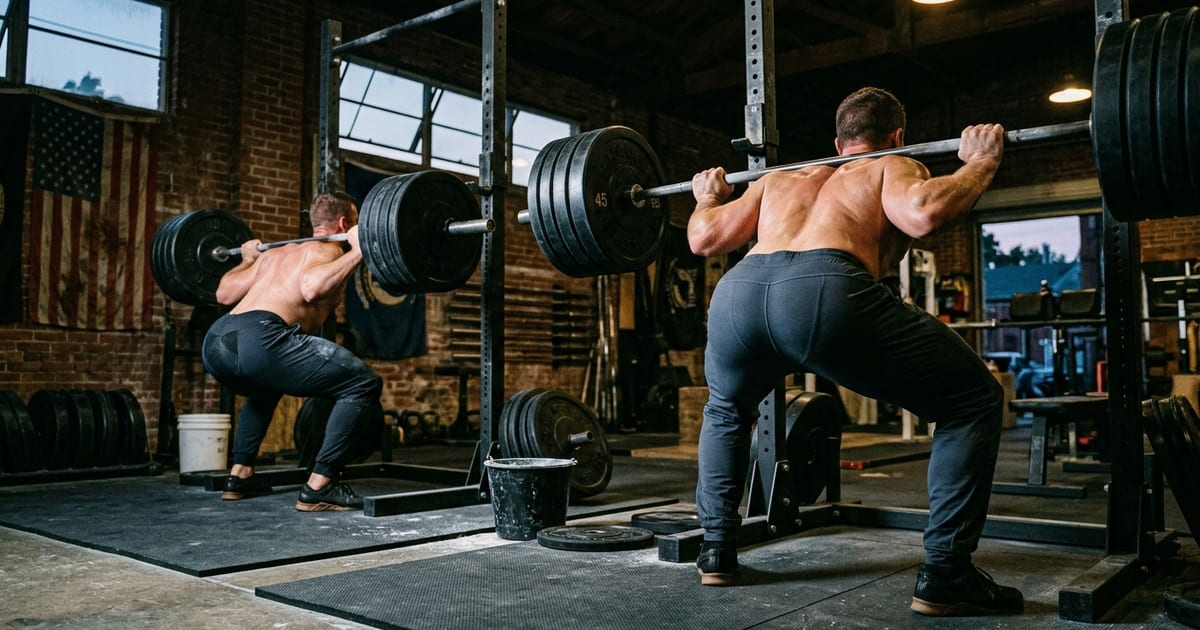
Crotch Gusset vs Diamond Gusset: Which Panel Design Actually Survives Heavy Squats?
For heavy squats, a diamond gusset outperforms a standard crotch gusset in both durability and range of motion. The diamond panel's geometry redistributes stress across four seam points instead of two, reducing the concentrated tension that causes crotch blowouts. If you're squatting regularly at moderate-to-heavy loads, diamond gusset construction is the more structurally sound choice.
Why Seam Construction Matters for Squatting
A squat at depth puts your shorts under significant mechanical stress. The crotch area stretches in multiple directions simultaneously — forward at the hip crease, laterally at the inner thigh, and downward as you descend. Most seam failures in gym shorts happen here, not at the waistband or hem.
The type of gusset sewn into that zone determines how well the garment handles that load.
What Is a Crotch Gusset?
A crotch gusset is a simple added panel — often square or rectangular — inserted at the intersection of the inner leg seams. It's an improvement over no gusset at all, adding some extra fabric where the four seam lines converge.
The limitation: stress still concentrates at those four joining points. Under repeated deep squats, those junctions are the first to fray or separate.
What Is a Diamond Gusset?
A diamond gusset is a four-pointed panel oriented with its corners pointing toward the front, back, and both inner thighs. This geometry does something structurally important: it spreads load along diagonal seam lines rather than routing it through a single central junction.
The result is a panel that moves with your body rather than resisting it. When you hit depth, the diamond shape allows each seam to flex independently, reducing the peak stress at any single point.
The Practical Difference: Squatting in Each
Here's how the two designs behave under a loaded squat:
- Crotch gusset: Adequate for moderate depth and lighter loads. You may feel fabric pulling or tightening at the inner thigh as you approach parallel.
- Diamond gusset: Better freedom of movement at full depth. The panel geometry accommodates hip external rotation and inner thigh stretch simultaneously without creating a single point of failure.
For powerlifting-style squats — wide stance, significant external rotation, consistent depth — the diamond gusset is the more appropriate construction.
What to Look for When Buying
When evaluating gym shorts for squat-friendly design, check these specifics:
- Panel shape: Look for a true four-pointed diamond, not a rounded square passed off as one.
- Seam stitching: Flatlock or reinforced stitching at the gusset corners adds durability where stress is highest.
- Fabric at the gusset: The panel should match or exceed the stretch percentage of the main fabric. A stiff insert in a stretchy short creates its own stress point.
- Panel size: A gusset that's too small doesn't redistribute enough load. Look for panels that extend at least partway down the inner thigh.
Current Options Worth Considering
A few shorts with well-executed diamond gusset construction available in 2026:
- Gymshark Apex Shorts — flatlock seams, structured diamond panel, available in 5" and 7" inseam
- Born Primitive Savage 1 Shorts — built specifically for powerlifting, reinforced gusset, thicker fabric weight
- Barbell Apparel Athletic Fit Shorts — tapered cut with a functional diamond gusset designed for lifters with developed legs
Prices range from approximately $35–$75 depending on brand and inseam length.
How This Fits Into Your Training Log
Once you've dialed in your gear, log your squat sessions in Kenso to track depth cues, RPE, and progression across cycles — so equipment is the last variable affecting your performance, not the first.
The Bottom Line
Gusset design isn't a marketing detail — it's a structural choice that affects how your shorts perform under load. A diamond gusset distributes stress more effectively than a crotch gusset, making it the better option for lifters who squat heavy and squat often. When you're evaluating shorts, look past the fabric weight and colorway and check what's happening at the seam intersection. That's where the shorts will either hold or fail.
Frequently Asked Questions
What is a diamond gusset in gym shorts?
A diamond gusset is a four-pointed fabric panel sewn into the crotch area of gym shorts, oriented so its points extend toward the front, back, and both inner thighs. This geometry spreads seam stress across multiple directions, improving durability and range of motion during exercises like squats.
Are diamond gussets better than crotch gussets for squats?
Yes, for heavy or deep squats, diamond gussets generally outperform standard crotch gussets. The diagonal seam lines of a diamond panel handle multi-directional stress better, reducing the risk of seam failure at depth and allowing greater freedom of movement through the hip crease and inner thigh.
What gym shorts are best for powerlifting squats?
Look for shorts with a true diamond gusset, flatlock or reinforced seam stitching, and a fabric with at least 4-way stretch. Options like the Born Primitive Savage 1 Shorts and Barbell Apparel Athletic Fit Shorts are built with heavy squatting in mind.
How do I know if my gym shorts have a real diamond gusset?
Turn the shorts inside out and examine the crotch panel. A true diamond gusset will have four distinct seam lines meeting at four separate corners, forming a rotated square shape. If the panel is rounded or only has two seam junctions, it's a basic crotch gusset.
Can gym shorts without a gusset hold up to heavy squats?
Unreinforced shorts — those with a single central seam and no gusset — are not well-suited to consistent heavy squatting. The single seam junction concentrates all stress in one point and is significantly more prone to tearing or fraying over time.
This article contains affiliate links. We may earn a small commission at no extra cost to you.