
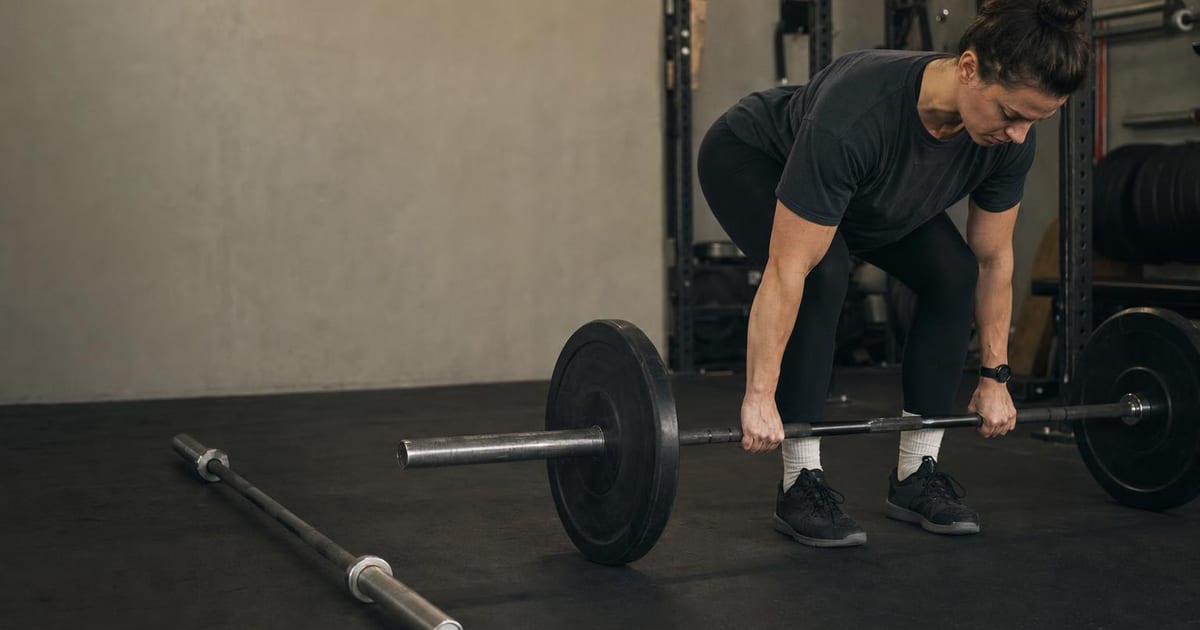
For most lifters, a stiff 29mm power bar is the better deadlift bar; a 27mm deadlift bar only pays off for heavy pullers (~500 lb+) in federations that allow it. The Rogue Ohio Power Bar is a good example of the power bar category. A power bar builds strength off the floor, works for squat and bench too, and matches the single-bar rule of IPF-affiliated federations and is legal everywhere. A deadlift bar is worth it only if you already pull heavy, roughly 500 lb (227 kg) and up, and you compete in a federation that allows one. A multi-purpose bar is fine for general training but adds little for a lifter focused on the pull.
TL;DR
If you own one barbell, make it a power bar: 29mm shaft, minimal whip, aggressive knurl, about $300 to $400. Add a deadlift bar (27mm, longer shaft, more whip, about $350 to $450) only if you are a heavy puller competing where it is legal, and use it in the final weeks before a meet. Multi-purpose bars (28 to 28.5mm) suit mixed training, not specialized pulling. Whichever you choose, note the bar with every session. In your log, a deadlift-bar PR and a power bar PR are different data points. Keep them as separate lifts so one does not distort the other's progression.
The Angle Most Bar Guides Miss: The Bar Is a Training Variable
Most comparisons stop at specs. The more useful question is what each bar does to your numbers over a training cycle.
A deadlift bar can add weight to your top single. Anecdotal lifter reports (not controlled studies) put the gap anywhere from about 5 to 40 lb, depending on the lifter and the load. That difference does not come from more strength. It comes from the bar letting the plates leave the floor a fraction later, after you have already started moving.
If you switch between bars without noting it, your training log stops telling you the truth. A 20 lb jump might be adaptation, or it might be the bar. Keeping that distinction clean matters more than which bar you buy.
How the Three Bar Types Actually Differ
Power Bar (the stiff bar)
- Shaft diameter: 29mm (some 28.5mm models)
- Whip: minimal. The bar stays rigid under load.
- Knurl: aggressive, usually with center knurl for squats
- Weight: standardized at 45 lb or 20 kg
- Length: about 86 to 87 inches
The power bar is built for balanced performance across squat, bench, and deadlift. Because it barely bends, the plates break from the floor almost as soon as you pull, so you get honest feedback on your start position.
Deadlift Bar
- Shaft diameter: 27mm, which is noticeably easier to grip
- Whip: high. The shaft bends before the plates leave the floor.
- Knurl: aggressive, typically no center knurl
- Length: about 90 inches, with more space between collars
The longer, thinner shaft bends under heavy load. That lets you get partway into the pull before the weight leaves the ground, which shortens the hardest part of the lift.
There is a catch. The extra length and flex add slack to the bar. If you already struggle to pull slack out of a normal power bar, a deadlift bar makes it worse. Your timing gets sloppy, and the advantage disappears.
Multi-Purpose Bar
- Shaft diameter: 28 to 28.5mm
- Whip: moderate
- Knurl: medium, usually no center knurl
- Use case: Olympic lift variations, conditioning, general strength training
A multi-purpose bar is the middle ground. It deadlifts fine at moderate loads, but it is neither as stiff as a power bar nor as forgiving off the floor as a deadlift bar.
When Does Deadlift Bar Whip Actually Matter?
This is where the deadlift bar vs stiff bar debate gets practical. Whip depends on load. A bar only bends meaningfully when there is enough weight on the sleeves.
One frequently cited r/powerlifting community discussion argues that from 0 to around 600 lb, a deadlift bar resists about as much as a stiff bar. In that view, the real benefit shows up around 750 to 800 lb. That is one community view, not a lab finding. Still, it reflects a broad consensus: the whip advantage grows with the load.
A reasonable working guide:
- Under 400 lb (180 kg): little meaningful whip. The thinner grip is the main benefit.
- 400 to 600 lb (180 to 270 kg): some whip, but you have to learn new timing.
- 600 lb (270 kg) and above: whip becomes a real competitive tool for lifters who have practiced with it.
These thresholds fit together. Below about 400 lb the benefit is mostly grip. The roughly 500 lb buy-in used in this guide is a practical cost and benefit line for buying a second bar. The largest whip benefit appears at elite loads.
If you are below the first threshold, a deadlift bar is mostly a grip aid. Chalk and a well-knurled power bar solve the same problem for far less money.
Ranked: The Best Bars for Deadlift Training in 2026
Specs and prices are approximate as of November 2026, based on manufacturer listings, and vary by finish and retailer. Check current listings before buying.
1. Rogue Ohio Power Bar
The default recommendation for lifters who want one bar to pull, squat, and bench with for a decade.
- 29mm shaft, center knurl, and a tensile strength Rogue has listed at around 205K PSI (confirm on the current product page)
- Available in multiple finishes, including stainless and cerakote
- Roughly $345 to $500 depending on finish
2. Texas Power Bar
A long-standing powerlifting standard with a reputation for grippy knurl and durability.
- 29mm shaft, stiff, center knurl
- Long track record in commercial and garage gyms
- Typically around $300 to $350
3. Texas Deadlift Bar
The classic specialty deadlift bar and the reference point most others are compared against.
- 27mm shaft, about 90 inches long, significant whip
- Legal in many non-IPF federations; check the rulebook
- Typically around $350 to $450
4. Rogue Ohio Deadlift Bar
A well-finished alternative to the Texas Deadlift Bar with a similar thin, whippy design.
- 27mm shaft, no center knurl, extended length (around 90 inches; confirm on the current listing)
- Multiple finish options
- Roughly $350 to $450
5. Rogue Ohio Bar
The best choice if you also train Olympic lift variations or conditioning work and pulling is only part of your program.
- 28.5mm shaft, moderate whip, no center knurl
- Versatile enough for most barbell movements
- Roughly $325 to $450
6. Titan Fitness Deadlift Bar
A budget way to try a deadlift bar before committing to a premium model.
- 27mm shaft, extended length
- Lower price, though fit, finish, and knurl consistency trail premium bars
- Typically under $300
Deadlift Bar Comparison Table
| Bar | Type | Shaft Diameter | Whip | Center Knurl | Approx. Price | Best For |
|---|---|---|---|---|---|---|
| Rogue Ohio Power Bar | Power | 29mm | Low | Yes | $345 to $500 | All-round powerlifting |
| Texas Power Bar | Power | 29mm | Low | Yes | $300 to $350 | All-round powerlifting |
| Texas Deadlift Bar | Deadlift | 27mm | High | No | $350 to $450 | Heavy competitive pullers |
| Rogue Ohio Deadlift Bar | Deadlift | 27mm | High | No | $350 to $450 | Heavy competitive pullers |
| Rogue Ohio Bar | Multi-purpose | 28.5mm | Moderate | No | $325 to $450 | Mixed training |
| Titan Fitness Deadlift Bar | Deadlift | 27mm | High | No | Under $300 | Trying a deadlift bar on a budget |
Prices are approximate as of November 2026. Check current listings.
How to Choose Which Barbell to Deadlift With
- Check your federation first. IPF-affiliated federations use a single stiff power bar for all three lifts. Many non-IPF federations permit deadlift bars on the platform. Read the rulebook for the meet you are actually entering.
- Be honest about your numbers. If your deadlift is under about 500 lb, the whip advantage is small. A power bar will serve you better and also covers squat and bench.
- Audit your slack-pulling. Film a few heavy singles. If the bar clicks or jerks off the floor on a power bar, fix that before adding a bar that has more slack.
- Consider your whole program. If you also do cleans, snatch variations, or conditioning work, a multi-purpose bar may be the more useful single purchase.
- Budget for the bar you will use most. A deadlift bar is a second bar, never a first one.
A Practical Protocol for Adding a Deadlift Bar
If you compete where deadlift bars are legal and you pull heavy, this structure keeps your data clean:
- Do most of your training block on a power bar. For a 12-week cycle, weeks 1 to 8 stay on the stiff bar for all primary deadlift work.
- Introduce the deadlift bar around 4 weeks out. Start with 2 to 3 sessions of submaximal work, around 70 to 80% of your power bar max, to learn the slack and timing.
- Use it for heavy singles in the final 2 to 3 weeks. Keep accessory pulling, such as RDLs and paused pulls, on the power bar.
- Keep the deadlift-bar work separate in your log. Record the deadlift-bar session as a separate deadlift variation, so the progression engine and e1RM trend for your power bar deadlift stay uncontaminated. A deadlift-bar single and a power bar single should never share a progression line.
- Compare off the same baseline. After the meet, note the difference between your best deadlift-bar single and your best power bar single. That number becomes useful for planning attempts in the next cycle.
This approach builds strength where the feedback is most honest. You only use the deadlift bar to express that strength when it counts.
How This Fits Into Your Training Log
Kenso's rule-based progression engine works from the sets you log. If you record deadlift-bar sessions as a separate deadlift variation, the whip never inflates your power bar deadlift's weight recommendations or its e1RM trend.
Ask the Kenso AI Coach (Kenso Pro) how a deadlift bar fits your program. The Coach reads your logged training history and can adjust your program on request. Kenso Pro costs $4.99/month or $29.99/year, and the yearly plan includes a 7-day free trial. Lifetime Pro is $79.99 (US) through Dec 1, 2026.
Power Bar Deadlift Training: Why the Stiff Bar Builds the Base
There is a reason many strong pullers do most of their training on a stiff bar. A rigid bar gives you no help at the start of the lift. Weak positions show up immediately, and you have to generate tension before the plates move.
That makes the power bar a better diagnostic tool. If your hips shoot up or your back rounds early, you will see it on the stiff bar first. Consistent work through those positions, tracked session after session, is what moves a deadlift over years rather than weeks.
The deadlift bar is a specialized tool for expressing strength under specific competition rules. The power bar is where most of that strength gets built.
Conclusion
The deadlift bar vs power bar question has a clear default answer. Train on a power bar. Treat a deadlift bar as an optional competition tool once your numbers and your federation justify it. A multi-purpose bar is a reasonable choice if pulling is only one part of a broader program.
Whatever you choose, the bar is part of the data. Record it, keep bar types separate in your log, and judge progress against a consistent baseline. Kenso is built for that kind of intentional tracking.
- Record deadlift-bar sessions as a separate deadlift variation, so the progression engine works from honest power bar numbers.
- With Kenso Pro, ask the AI Coach to review your logged history and adjust your program to show when a specialty bar belongs in your cycle.
Download Kenso on iOS and start building a training history you can trust.
Frequently Asked Questions
Is a deadlift bar or power bar better for deadlifts?
For most lifters, a power bar is better. It is stiffer and more versatile, and it matches the single-bar rule of IPF-affiliated federations and is legal everywhere. A deadlift bar can add weight to a top single for heavy pullers. That advantage is smaller below about 500 lb and depends on practiced timing.
How much more can you lift with a deadlift bar?
Anecdotal lifter reports (not controlled studies) typically range from about 5 to 40 lb. The gap tends to grow with load and with experience on the bar. Lighter pullers usually see little difference beyond the easier grip.
What is the difference between a deadlift bar and a stiff bar?
A stiff bar, usually a 29mm power bar, barely bends under load, so the plates leave the floor almost immediately. A deadlift bar is thinner (27mm) and longer, so it bends before the plates break from the floor. That reduces the distance you pull from a dead stop.
Can you use a deadlift bar in competition?
It depends on the federation. IPF-affiliated federations require a single stiff power bar for all lifts. Many non-IPF federations allow deadlift bars. Check the specific meet rulebook before you plan your training around one.
Should beginners train with a deadlift bar?
Generally no. Beginners benefit more from the honest feedback of a stiff power bar. The extra slack in a deadlift bar can also make it harder to learn consistent timing. A power bar or multi-purpose bar is a better first purchase.
Should I track deadlift bar and power bar lifts separately?
Yes. The two bars produce different numbers for the same effort, so combining them blurs your real progression. Record deadlift-bar sessions as a separate deadlift variation to keep your power bar e1RM trend and progression recommendations accurate.
Citations
- "Training with a deadlift bar vs stiff bar," r/powerlifting community discussion, Reddit
- "5 Different Types of Deadlift Bars & Their Uses," PowerliftingTechnique.com (https://powerliftingtechnique.com)
- "What Are Deadlift Bars? A Comprehensive Guide," ExercisePick (https://exercisepick.com)
- Rogue Fitness product pages for the Ohio Power Bar, Ohio Deadlift Bar, and Ohio Bar (https://www.roguefitness.com)
- International Powerlifting Federation Technical Rules (https://www.powerlifting.sport)
This article may contain affiliate links. We may earn a small commission at no extra cost to you.