
Gusset Panels in Gym Shorts: Do They Really Matter for Squats?
A gusset panel — the extra piece of fabric sewn into the crotch of gym shorts — is an underrated design detail that can meaningfully affect squat comfort. It works by redistributing seam tension away from the inner thigh, allowing full hip flexion without the shorts pulling tight, riding up, or creating a pressure point at the crotch. Without one, a standard flat seam sits directly under load as you descend, and that restriction can compound across every rep.
What a Gusset Panel Actually Does
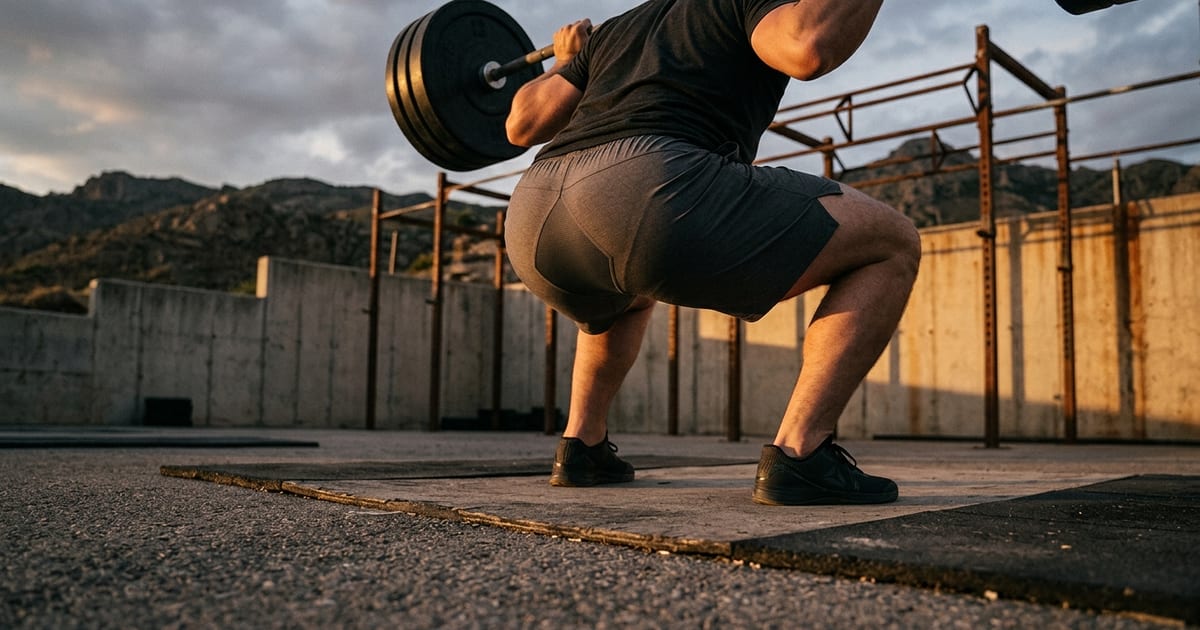
Most shorts are constructed with two fabric panels sewn together at a single central seam. When you squat, your hips flex past 90 degrees and your thighs rotate outward — that seam gets pulled in three directions simultaneously.
A gusset inserts a third (or fourth) panel at the junction, turning a two-point tension system into a distributed one. The seams move to the sides of the inner thigh rather than sitting directly underneath it. In practice, this tends to feel like less fabric drag and more freedom of movement at the bottom of the squat, though we're not aware of a published study measuring the effect on range of motion.
Diamond vs. Oval: Which Gusset Shape Works Better?
There are two common gusset geometries worth knowing:
- Diamond gusset: A four-point panel, typically several inches across, oriented like a rotated square. Common in men's training shorts. As a matter of construction, its four anchor points tend to keep it flat during dynamic, multidirectional movement.
- Oval gusset: An elliptical panel, more common in women's shorts. On design principles, an oval provides smooth, distributed stretch that works well for straight-plane movements like squats. Any claim that one shape outperforms the other for specific movement patterns is design reasoning, not something we can back with a citation.
Either is a reasonable upgrade over no gusset at all, and the practical difference between shapes is likely small for most lifters.
What to Look for When Buying
When evaluating gym shorts for squat-specific training, check these details:
- Inseam length: A 5–7 inch inseam generally gives the gusset room to function. Very short inseams (around 3 inches) reduce the fabric available for panel construction.
- Fabric composition: A 4-way stretch nylon/spandex blend lets the gusset move with you rather than against you. Woven fabrics with limited stretch undermine the panel's purpose.
- Seam placement: The gusset seams should land on the lateral inner thigh, not directly underneath. You can check this by holding the shorts up and looking at where the panel joins the leg fabric.
- Panel size: As general design guidance, a very small gusset panel provides less benefit at depth than a larger one; panels in the 4–5 inch range tend to suit wide-stance or sumo positioning. Treat any specific number as a rough guide rather than a validated standard.
Shorts Worth Considering
Rather than list specific products, prices, and gusset shapes that change frequently and can't be reliably verified, look for shorts from established training brands (for example, Lululemon and Under Armour) that explicitly advertise a gusseted crotch and a 4-way stretch fabric. Check the current product page for the stated inseam, fabric composition, and whether a gusset is mentioned — and note that specs and prices change from season to season.
How This Connects to Tracking Your Training
Equipment details like this matter more than they're given credit for. If restriction at the bottom of a squat is causing you to cut depth short — even slightly — it can affect how each rep feels. Kenso can't see or measure your squat depth (it has no camera or velocity tracking), but it does log the data you enter: sets, reps, weight, and RPE. If your squat volume or RPE patterns start drifting, the Claude-powered AI Coach can review that logged history and flag trends worth a closer look. Small equipment adjustments and honest rep logging work together.
The gusset is a small thing. But in training, small things that repeat across hundreds of sessions can add up to meaningful differences in comfort and consistency.
Ready to track your squat sessions with the precision they deserve? Download Kenso on iOS and start logging with intention.
Frequently Asked Questions
What is a gusset panel in gym shorts?
A gusset panel is an additional piece of fabric — usually diamond or oval shaped — sewn into the crotch area of gym shorts to redistribute seam tension and allow freer movement during exercises like squats and lunges.
Do gym shorts need a gusset for squatting?
Not technically, but shorts without a gusset place a single flat seam directly under the hip crease during a squat. This can create pulling and restriction at depth that a gusset panel reduces by spreading tension across multiple seam lines.
What's the difference between a diamond gusset and an oval gusset in activewear?
A diamond gusset is a four-pointed panel with anchor points that help it stay flat during multidirectional movement, while an oval gusset is elliptical and provides smooth, distributed stretch. Which feels better is largely personal preference — we're not aware of research establishing that one shape outperforms the other for specific movements.
How big should a crotch gusset be in squat-friendly shorts?
There's no cited standard here, so treat sizing as general guidance: larger panels (roughly 4–5 inches across) tend to give more room for wide-stance or sumo positioning where hip abduction is greater, while very small panels offer less benefit at depth.
Are gusset panels only important for squats?
No — gusset panels improve comfort for any movement requiring significant hip flexion or abduction, including deadlifts, lunges, step-ups, cycling, and rowing. They're particularly noticeable in exercises where you spend time at the end range of hip flexion.
This article contains affiliate links. We may earn a small commission at no extra cost to you.