
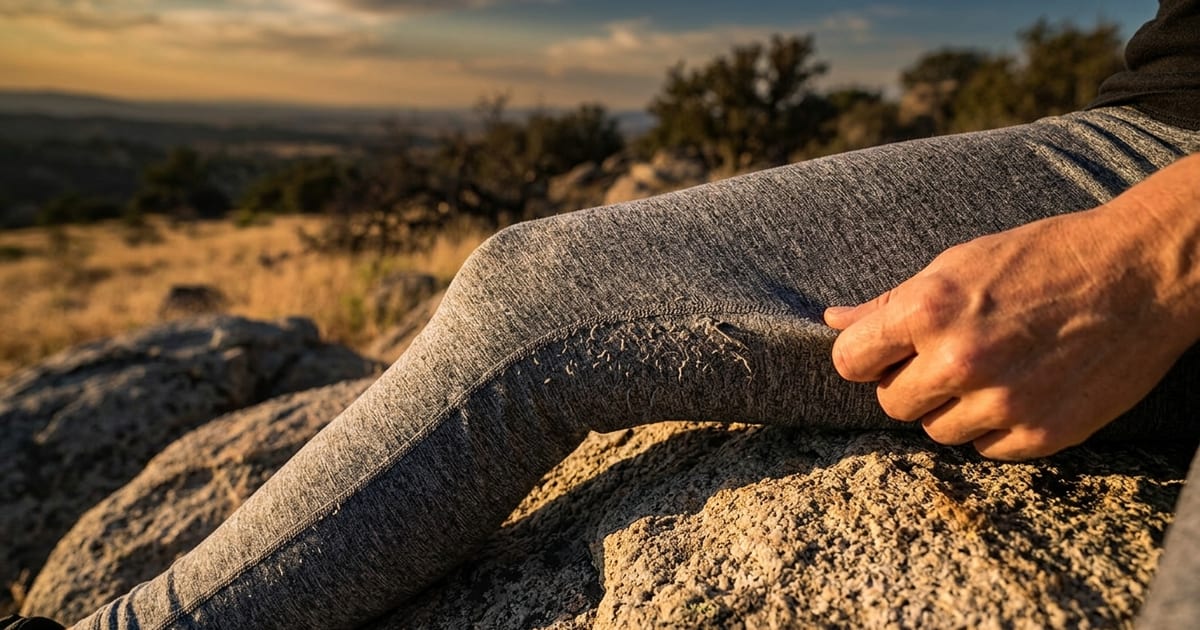
Gym Clothes Pilling: What Fabrics Actually Last?
Gym clothes pill primarily because low-quality polyester-cotton blends allow cotton fibers to separate and tangle under repeated friction — exactly the kind of stress that happens every session. For long-lasting workout apparel, 100% performance polyester, nylon, or nylon/polyester-spandex blends without cotton hold up significantly better. Avoiding fabrics marketed as "moisture-wicking" with PFAS chemical finishes also matters, both for durability and health reasons.
Why Gym Shirts Pill in the First Place
Pilling isn't random. It's a mechanical failure that happens when short, loose fibers — common in cotton and low-grade polyester — work their way to the surface under friction and tangle together. The seams of your bag, the bench surface, the barbell knurling: all of it accelerates the process.
Poly-cotton blends are especially prone to this. The cotton component starts separating from the polyester at a fiber level after repeated washing and use. Pure cotton clothing actually pills less than blended fabrics for this reason — but it's also a poor choice for high-intensity training since it holds moisture and loses shape.
The Fabric Blends That Hold Up Longer
For activewear durability, the material composition matters more than the brand name on the tag.
Polyester (high-grade, 100%) remains the workhorse of long-lasting workout apparel. It's quick-drying, resists abrasion, and maintains structure wash after wash. The caveat: many polyester fabrics are treated with PFAS chemicals to add water repellency. The EU is now moving to restrict PFAS in consumer products — the European Chemicals Agency (ECHA) published a broad PFAS restriction proposal under REACH in 2023 — and the U.S. EPA characterizes PFAS as persistent "forever chemicals" that break down very slowly in the environment. Look for PFAS-free labeling if this concerns you.
Nylon outperforms polyester on abrasion resistance and tends to maintain elasticity longer — relevant if you're doing any floor work, sled pulls, or exercises that put your clothing in direct contact with rough surfaces.
Spandex blends (roughly 5–20%) with a nylon or polyester base provide stretch and shape recovery. Most quality activewear falls in this range; higher percentages (20%+) generally move into compression territory. Note that spandex content mainly affects how a garment fits and returns to shape, not its pilling resistance per se — the durability advantage over cotton comes from the polyester or nylon base fiber, not from more spandex.
Tencel (Lyocell) blends have become more common in mainstream athleisure in recent years. Derived from wood pulp, Tencel is notably smooth at the fiber level, which reduces surface friction and pilling. It's not the top choice for heavy lifting — it's softer and less abrasion-resistant than nylon — but it's a solid option for lower-intensity sessions or as a training layer.
How You Care for Activewear Affects Longevity Too
Fabric choice only goes so far. Allowing garments to fully dry and rest between wears may help spandex recover its shape, so rotating your gear rather than wearing the same two shirts every session can be worthwhile. Washing on cold, skipping the dryer, and turning garments inside out before washing all reduce the surface friction that causes pilling.
Avoiding rough surfaces during training also matters more than most people consider. Sitting on a textured bench in a thin shirt or leaning against a rough concrete wall repeatedly will degrade even quality fabric over time.
What This Means for Your Training Wardrobe
If you're tracking your training consistently with Kenso — logging sessions, monitoring progressive overload over months — your gear is going through the same volume your body is. A shirt that pills after 30 washes isn't built for a lifter who trains four days a week, 50 weeks a year.
Investing in a smaller number of well-constructed pieces — 100% performance polyester or nylon-spandex blends, PFAS-free where possible — is a more practical approach than replacing cheap activewear every few months. Kenso is built on the same principle: fewer, better inputs tracked with intention over time, rather than chasing novelty.
The fabric you train in every session is worth the same level of consideration you give your programming.
Track your training with the same consistency you expect from your gear. Download Kenso on iOS and start logging sessions and tracking progressive overload.
Frequently Asked Questions
Why do gym clothes pill so quickly?
Gym clothes pill when short fibers — most common in cotton and low-grade polyester-cotton blends — surface under repeated friction and tangle together. High-stress contact points like seams, bench surfaces, and barbell knurling accelerate the process significantly.
What is the best fabric for gym clothes longevity?
High-grade 100% polyester, nylon, and nylon-spandex blends (typically 5–20% spandex) offer the best durability for consistent training. These fabrics resist abrasion, maintain shape after repeated washing, and don't have the fiber-separation issue common in cotton blends.
Do polyester-cotton blends pill faster than pure polyester?
Yes. Polyester-cotton blends are particularly prone to pilling because the cotton fibers separate from the polyester under friction and washing. Pure performance polyester holds up significantly better for high-frequency training use.
Is Tencel good for gym clothes?
Tencel (Lyocell) is a durable, low-pilling option for lower-intensity training and athleisure wear. Its smooth fiber structure reduces surface friction. For heavy lifting or high-sweat sessions, nylon or performance polyester remains the more practical choice.
How can I make activewear last longer?
Rotate your gear so the same pieces aren't used consecutively, wash on cold inside-out, skip the dryer, and avoid rough surfaces during training. Choosing PFAS-free fabrics with a durable polyester or nylon base also extends garment lifespan.
This article contains affiliate links. We may earn a small commission at no extra cost to you.