
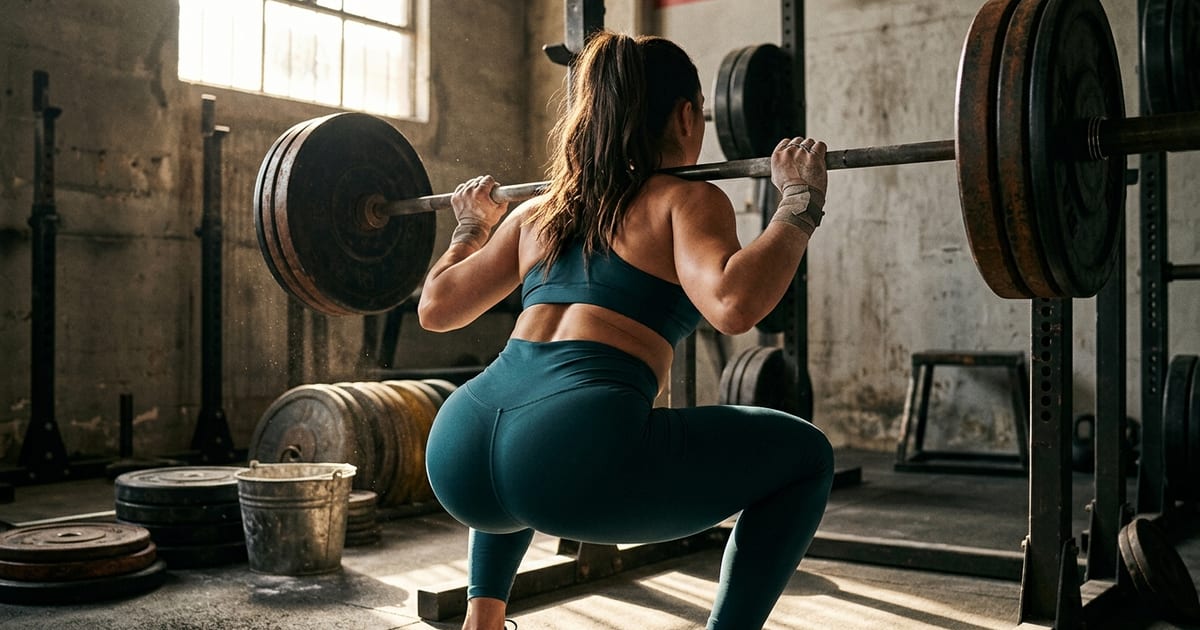
Gym Leggings Waistband Types: Which Is Best for Heavy Lifting?
For heavy lifting — deadlifts, squats, Romanian deadlifts — a wide waistband of at least 2.5 inches with a no-slip interior grip is the most reliable choice. Wide bands distribute pressure evenly across your midsection, which prevents rolling and bunching when you hinge or brace hard. Fold-over and drawstring designs can work, but each comes with specific trade-offs worth understanding before you buy.
Why Waistband Design Actually Matters Under Load
When you set up for a heavy deadlift, your intra-abdominal pressure spikes and your torso changes shape. A waistband that sits fine during a jog can roll, bunch, or dig in the moment you brace. That's not a comfort issue — it's a distraction that can interrupt your setup and focus.
The mechanism is straightforward: wider bands spread the load over more surface area, reducing localized pressure and giving the band less tendency to fold or roll when your torso shape changes under bracing.
The Three Waistband Types, Compared
Wide Band (2.5 Inches or More)
This is the gold standard for lifting. A wide elastic band — especially one with flat-lock seaming and a silicone or brushed interior grip — resists rolling under load and doesn't migrate during hip hinge movements.
- Best for: Deadlifts, squats, hip thrusts
- What to look for: 2.5"+ width, no-slip interior strip, reinforced stitching at the band-to-fabric junction
- Limitation: Less adjustability; sizing matters more
The Lululemon Align High-Rise Pant 28" and Gymshark Vital Seamless 2.0 Leggings both use wide, structured waistbands that hold position reliably through full ranges of motion.
Fold-Over Waistband
Fold-over designs were popularized in yoga, and they work well when the fabric has enough body to grip. The problem in lifting: thinner fabrics don't hold the fold under repeated bracing. As a practical matter, denser fabrics keep the fold in place better, while thin, lightweight material tends to slump or unroll once you start bracing hard — worth testing yourself before trusting it under load.
- Best for: Lighter training, mobility work, Pilates
- What to look for: Dense, structured fabric (nylon-dominant blends hold better than polyester-light options)
- Limitation: Unreliable on heavy compound lifts; fabric weight is everything
Drawstring
Drawstrings offer something the other two don't: a custom fit regardless of waist-to-hip ratio. An internal loop drawstring lets you cinch the waistband precisely, which is useful if you sit between sizes or have a narrower waist relative to your hips.
- Best for: Lifters who struggle with standard sizing, or anyone who wants adjustability
- What to look for: Internal (not external) drawstring, flat knot placement to avoid pressure points under a belt
- Limitation: External drawstrings can press uncomfortably against a lifting belt; internal placement solves this
The Vuori Daily Legging features an internal loop drawstring that cinches without bulk — a practical choice if you train with a belt regularly.
The Lifting Belt Compatibility Factor
If you use a weightlifting belt, waistband bulk becomes a real consideration. A thick fold-over or wide external waistband can create uneven pressure under the belt, affecting how it sits. Low-profile wide bands or internal drawstrings tend to sit more cleanly underneath a 4-inch lever belt.
Tracking your training sessions in Kenso makes it easier to notice patterns — including subtle performance dips on days when your setup feels off. Small equipment details compound over hundreds of sessions.
Which Waistband Should You Choose?
For most lifters focused on progressive overload:
- Primary choice: Wide band (2.5"+) with no-slip grip and flat-lock seaming
- If you're between sizes: Internal drawstring with a structured band
- Fold-over: Only if the fabric is dense enough to hold the fold under load — test it before you trust it under a barbell
The right waistband won't add weight to your deadlift. But the wrong one will cost you focus reps across hundreds of sessions — and that adds up.
Track what actually moves the needle. Kenso's iOS training logger helps you log every session with intention, so you can identify what's working and what's getting in the way. Download Kenso and start training with more clarity.
Frequently Asked Questions
What is the best waistband type for deadlifts?
A wide waistband of at least 2.5 inches with a no-slip interior grip is best for deadlifts. It stays in place when you brace hard and doesn't roll or bunch during the hip hinge.
Do fold-over waistbands work for heavy lifting?
Fold-over waistbands can work for lifting if the fabric is dense and structured, but thinner fold-over designs tend to collapse under repeated bracing. They're more reliable for lighter training and mobility work.
Are drawstring gym pants good for lifting with a belt?
Internal drawstring designs work well under a lifting belt because they keep bulk to a minimum. Avoid external drawstrings, which can create pressure points where the belt sits.
How wide should a waistband be to prevent rolling during workouts?
As a practical rule, aim for a band 2.5 inches or wider. Spreading the load over more surface area reduces localized pressure and tends to make the band less prone to rolling than narrower designs.
What leggings waistband features should I look for in 2026?
Look for a wide band (2.5"+ minimum), flat-lock seaming, a no-slip interior grip strip, and reinforced stitching at the waistband-to-fabric junction. For adjustability, an internal drawstring is a practical addition.
This article contains affiliate links. We may earn a small commission at no extra cost to you.