
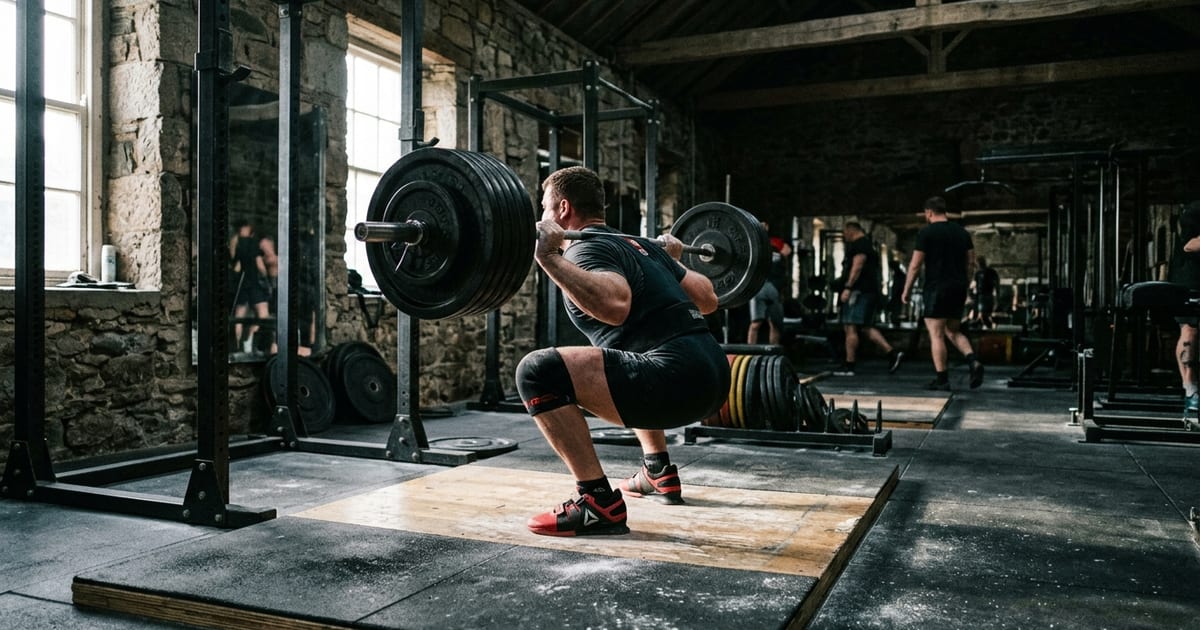
How Tight Should Lifting Shoes Actually Be: Fit Guide for Squat Shoes, Deadlift Slippers, and Cross-Trainers
Lifting shoes should fit snug — not tight — with 5–10mm of space between your longest toe and the end of the shoe, and absolutely zero heel slippage. Size true to your street shoe size or a half size down, never up. The fit standard changes meaningfully depending on the shoe type, so a one-size-fits-all answer will get you into trouble.
Why Lifting Shoe Fit Is Different From Running Shoe Fit
Running shoes are built for forward movement and impact absorption. They give you extra toe room (usually 10–15mm) because your foot slides forward on each stride. Lifting shoes are built for ground contact and lateral stability under load. Extra space in a lifting shoe becomes dead air — it lets your foot shift during a heavy squat or pull, which compromises your base.
This is why the standard "thumb's width" rule from running doesn't apply here.
Squat Shoe Sizing: Snug, Structured, and Stable
Squat shoes — think the Adidas Adipower 3, Nike Romaleos 4, or Do-Win Classic — have rigid soles and raised heels (typically 0.6"–1"). That heel elevation is engineered to improve ankle dorsiflexion and keep your torso more upright at depth.
For squat shoe fit:
- Toe space: 5–10mm between your longest toe and the end of the shoe
- Heel: Should not lift at all during a bodyweight squat
- Width: Foot should feel held, not compressed — toes should lie flat, not curl
- Laces + strap: The metatarsal strap (if present) should be firm but not cutting off circulation
Size true to your street shoe or a half size down. Squat shoes don't break in significantly — what you feel on day one is close to what you'll feel under 200kg.
Deadlift Slipper Fit: Compression Without Restriction
Deadlift slippers (like the Notorious Lifting Deadlift Slipper or similar minimalist options) are a different animal. They're designed to minimize the distance between your foot and the floor, keeping the bar path as short as possible.
These fit more like a compression sock than a shoe:
- They should feel snug across the entire foot
- Your heel should be fully enclosed with no bunching
- There should be no excess material at the toe — a baggy toe box defeats the purpose
- Sizing typically runs small; check brand-specific charts and go up if you're between sizes
Deadlift slippers aren't meant for walking around or warming up. Slip them on for your working sets, take them off after.
Cross-Trainer Fit: The Middle Ground
If you're running a mixed program — squats, pulls, carries, conditioning — a cross-trainer like the Nike Metcon 9 or Reebok Nano X5 is a reasonable all-around choice. These have semi-rigid soles and moderate heel-to-toe drop.
For cross-trainers, fit closer to your running shoe size but at the tighter end:
- 5–10mm of toe space
- Heel should stay put during lateral movement
- The midfoot should feel locked, not pinched
If you're regularly squatting above 80% of your max in cross-trainers, the lack of a rigid sole and structured heel will limit how much the shoe can actually support your mechanics.
The Heel Slip Test (Do This Before You Buy)
Regardless of shoe type, use this simple check before committing to a size:
- Lace or strap the shoe to your normal tension
- Perform 5 bodyweight squats
- Check for heel lift on the way down
- Check for toe compression at the bottom of the squat
If your heel lifts even slightly, go down a half size or tighten the fit. If your toes are curling or going numb, go up.
How This Fits Into Your Training Log
Once your shoe fit is dialed in, log your squat sessions in Kenso to track whether changes in footwear — or foot position — correlate with shifts in your working weights or perceived stability over time.
Getting the Fit Right Matters More Than the Brand
A well-fitted mid-range squat shoe will outperform a poorly fitted premium one every session. Kenso users who track their squat sessions consistently often notice that small equipment changes — including footwear — show up in their performance data over time. That's the value of logging with intention rather than just showing up and hoping for the best.
Take the time to fit your shoes properly, test them under load before committing, and treat footwear as part of your training setup — not an afterthought.
Frequently Asked Questions
How tight should squat shoes be?
Squat shoes should be snug with 5–10mm of toe space and no heel slippage. They should feel held and stable, not compressed or painful. Size true to your street shoe or a half size down.
Should deadlift slippers be tight?
Yes — deadlift slippers should fit like compression gear. The entire foot should feel enclosed with no excess material. They typically run small, so check brand sizing charts carefully.
Can I use cross-trainers for squats?
Cross-trainers work for moderate loads and mixed programming, but they lack the rigid sole and structured heel elevation of dedicated squat shoes. For consistent heavy squatting, a purpose-built squat shoe is worth the investment.
Should lifting shoes have a wide toe box?
The toe box should allow your toes to lie flat without curling, but shouldn't be so wide that your foot shifts laterally under load. A snug toe box with 5–10mm of length clearance is the target.
Do lifting shoes need to be broken in?
Not significantly. Quality lifting shoes — especially those with rigid soles — don't soften or mold much over time. What you feel in the store or on day one is a reliable indicator of long-term fit.
Ready to train with more intention? Download the Kenso app and start logging sessions that actually tell you something.
This article contains affiliate links. We may earn a small commission at no extra cost to you.