
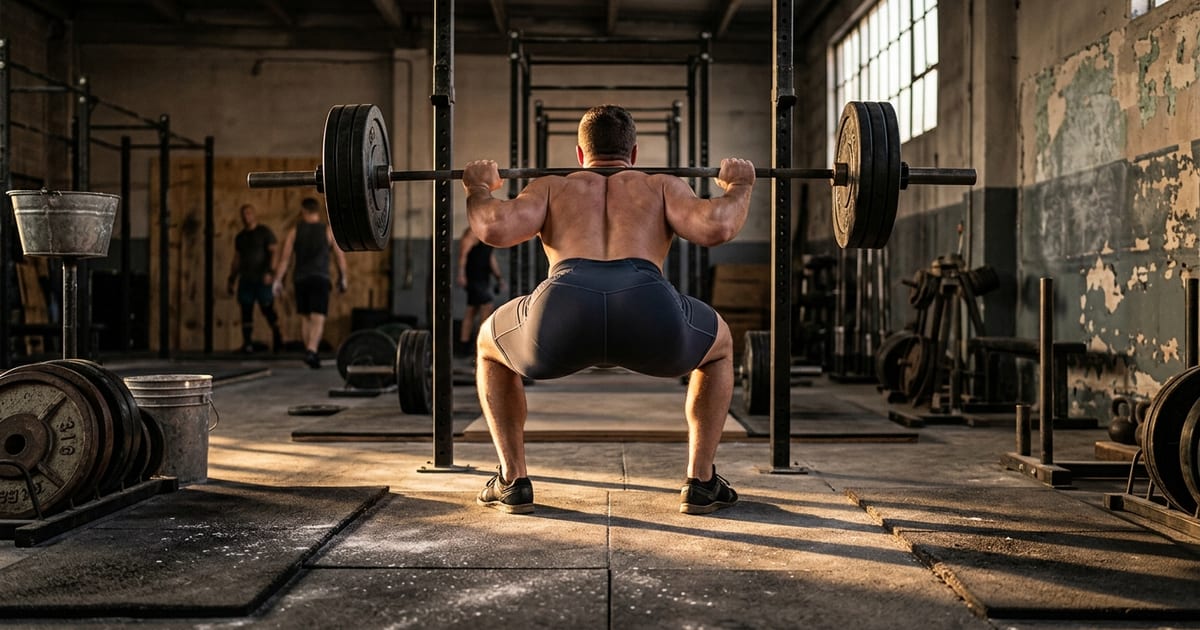
How to Size Lifting Shorts for Powerlifting: Waist vs Inseam vs Hip Measurements That Actually Fit
To size lifting shorts for powerlifting, measure your natural waist and hips, then choose a waist size that fits snugly without a drawstring doing all the work. For inseam, 5–7 inches works best for squats and deadlifts — short enough to allow full hip flexion, long enough to stay in place under a belt. Hip measurement is the one most lifters skip, and it's the one that causes the most fit problems.
Why Standard Sizing Fails Powerlifters
Most gym shorts are sized for waist only. That works fine for running or casual training. It often works less well for lifters built for strength. Many powerlifters tend toward broader hips and well-developed quads, and a low squat stance changes how a short fits in motion versus standing still — though physiques vary widely from lifter to lifter.
A size medium waist can be paired with hips that are 4–6 inches larger than the garment assumes. The result: shorts that fit at the waistband but bind at the thighs at the bottom of a squat.
The Three Measurements That Actually Matter
1. Waist Measurement
Measure at your natural waist — the narrowest part of your torso, roughly at or just above your navel. This is where most lifting shorts sit, especially those with a wide elastic band designed to work under a belt.
- Size to your actual waist measurement, not your pants size
- Pants are often sized 1–2 inches smaller than actual waist circumference
- The shorts should feel snug but not require a cinched drawstring to stay up
2. Hip Measurement
Measure at the widest point of your hips and glutes — typically 7–9 inches below your natural waist. This is the measurement that determines whether you can actually squat in the shorts.
- Check the brand's hip measurement in their size chart, not just the waist
- If your hips measure 40 inches and the shorts max out at 38, size up regardless of waist
- Stretch fabric (typically nylon/spandex blends) gives you more room, but hip circumference still sets the ceiling
3. Inseam Length
For powerlifting specifically:
- 5-inch inseam: Maximum hip freedom, sits high on the upper thigh. Best for wide-stance squatters and sumo deadlifters who need unrestricted hip external rotation.
- 7-inch inseam: The most versatile option. Sits at mid-thigh, stays in place during movement, works well for conventional pullers and moderate-stance squatters.
- 9–10-inch inseam: More coverage, but can restrict hip flexion at depth for some lifters. Better suited to accessory work than competition movements.
If you're unsure, measure an existing pair of shorts that feel right in the bottom position of a squat. That inseam length is your baseline.
A Simple Sizing Process
- Measure your natural waist (tape measure, not your pants size)
- Measure your hips at the widest point
- Check the brand's full size chart — waist and hip columns
- If you're between sizes, size up on hip measurement
- Choose inseam based on your primary lift: 5" for wide stance, 7" for most training
How This Connects to Your Training Data
Gear fit is a small variable, but it's a consistent one. If you're logging sessions in Kenso and noticing depth cues or mobility notes flagged by the AI Coach, it's worth ruling out equipment as a factor. Kenso's Claude-powered AI Coach has access to your full training history and can help you identify patterns — including whether recurring movement issues correlate with specific training days or setups.
Tracking your training consistently in Kenso also means you have a record of what changed when. If new shorts coincide with a shift in your squat depth or comfort, that data is there.
What to Look For in Powerlifting Shorts
When comparing options, general buying criteria that hold up for most lifters include:
- At least 6% spandex content for stretch
- Hip measurements listed explicitly in the size chart
- Inseam options at both 5" and 7"
- No built-in liner if you're training in compression shorts underneath
Shorts sized 30"–40" waist in a 94% nylon, 6% spandex construction cover most lifters and tend to hold up well to repeated washing without losing shape. Whenever possible, verify a brand's published size chart and material composition directly on the manufacturer's product page before buying.
The Bottom Line
Sizing lifting shorts for powerlifting comes down to three numbers: waist, hip, and inseam. Most fit problems trace back to ignoring hip circumference or defaulting to a pants size instead of a tape measurement. Take five minutes to measure before you order, prioritize brands that publish full size charts, and choose your inseam based on your actual competition stance — not what looks standard on the rack.
Small details compound over a long training career. Getting the fit right is one fewer variable between you and consistent, intentional sessions.
FAQ
What inseam length is best for powerlifting squats?
A 5–7 inch inseam is best for powerlifting squats. Five inches maximizes hip freedom for wide-stance work; seven inches suits most conventional and moderate-stance lifters while staying in place during movement.
Should I size up or down in lifting shorts if I'm between sizes?
Size up, and prioritize hip measurement over waist. A slightly looser waist is easy to manage with a drawstring; a tight hip circumference will restrict your squat depth and cannot be adjusted.
How do I measure myself for gym shorts sizing?
Measure your natural waist (the narrowest part of your torso, at or just above the navel) and your hips at the widest point of your glutes. Use both numbers against the brand's size chart — not your pants size, which typically runs 1–2 inches smaller than actual waist circumference.
Do powerlifting shorts need to fit differently than regular gym shorts?
Yes. Powerlifting shorts need to accommodate wide hip external rotation, deep squat depth, and use under a lifting belt. This means a snug waist, generous hip room, and a shorter inseam (5–7") compared to general training shorts.
Can I use Kenso to track how gear changes affect my training?
Kenso logs your session data over time, and the Claude-powered AI Coach can review your training history to help identify patterns. While Kenso doesn't integrate with hardware or sensors, consistent session logging gives you a reliable record to reference when variables — including equipment — change.
Ready to start tracking your training with the same precision you apply to your gear? Download Kenso on iOS at kensoforge.com and train with intention.
This article contains affiliate links. We may earn a small commission at no extra cost to you.