
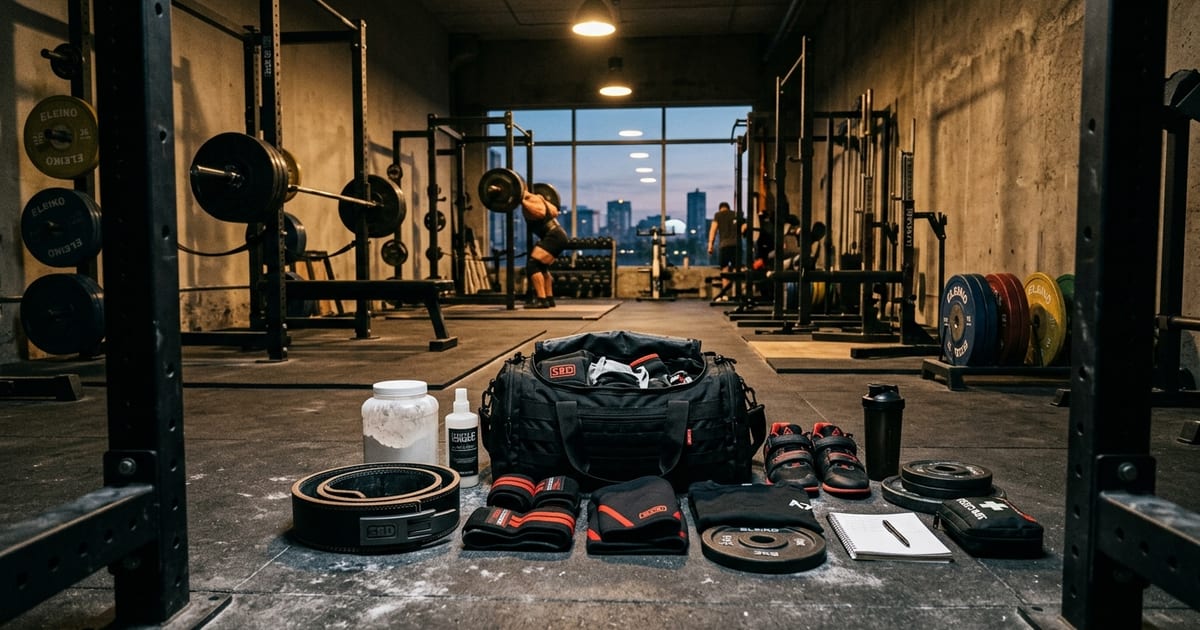
The best powerlifter gym bag contains weightlifting shoes, a quality belt, wrist wraps, chalk or Liquid Grip, and knee sleeves. These strength training essentials support proper technique and progressive overload while protecting your joints during heavy compound movements.
Core Powerlifting Equipment
Footwear Foundation
Weightlifting shoes are non-negotiable for serious powerlifters. The Adidas Powerlift 5 ($90) provides the stable platform needed for squats and deadlifts. Many lifters also pack deadlift slippers like the SABO Deadlift Shoes ($120) for optimal floor contact during pulls.
Support Gear That Matters
A quality powerlifting belt stabilizes your core during max efforts. The Pioneer Cut Belt ($180) offers the rigidity serious lifters need. Pair this with SBD Wrist Wraps ($45) for joint support without compromising your natural movement patterns.
Knee sleeves like the SBD Knee Sleeves ($85) provide warmth and mild support. They're particularly valuable for high-volume squat sessions when tracking your training progression with tools like Kenso.
Essential Accessories for Every Session
Grip and Recovery Tools
Chalk remains the gold standard for grip. Primo Chalk ($12) blocks work reliably, while Liquid Grip ($15) offers a mess-free alternative for gyms with chalk restrictions.
Pack Powerflex Athletic Tape ($8) and basic wound care supplies. Heavy training inevitably causes minor scrapes and callus tears that need immediate attention.
Hydration and Documentation
A quality water bottle prevents dehydration during long sessions. The Hydro Flask 32oz ($40) maintains temperature while fitting most gym bag pockets.
While Kenso handles digital tracking, many powerlifters still appreciate a physical backup log for meet preparation and program notes.
Choosing the Right Bag
Your gym bag needs to survive heavy use. Look for 900D-1800D denier material with reinforced stress points. The King Kong Jnr Kong Bag ($65) offers durability without excessive bulk.
Separate compartments keep clean clothes away from sweaty gear and protect your weightlifting shoes from chalk dust.
Building Your Checklist
Start with the basics: shoes, belt, wraps, and chalk. Add knee sleeves if you squat heavy regularly. Include a towel, extra shirt, and basic first aid supplies.
The key is consistency—pack the same essentials every session so nothing disrupts your training rhythm. When you're focused on progressive overload and tracking meaningful metrics, equipment failures become major distractions.
Ready to optimize your training tracking alongside your gym bag? Download Kenso to monitor your progression with the same intention you pack your gear.
What should every powerlifter pack in their gym bag?
Weightlifting shoes, a quality belt, wrist wraps, chalk or liquid grip, knee sleeves, a water bottle, and basic first aid supplies form the essential powerlifter gym bag checklist.
Do I need separate shoes for squats and deadlifts?
Many serious powerlifters pack both weightlifting shoes for squats and deadlift slippers for pulls, as each provides optimal positioning for their respective movements.
What bag material works best for heavy gym use?
Look for 900D-1800D denier material with reinforced stress points and quality zippers that can handle the weight of powerlifting equipment.
Should powerlifters bring knee sleeves to every session?
Knee sleeves provide joint warmth and mild support during high-volume training, making them valuable for most powerlifting sessions, especially squat-focused days.
How do I keep my gym bag organized for powerlifting gear?
Use separate compartments to isolate clean clothes from sweaty gear, protect shoes from chalk dust, and keep small accessories like tape and first aid supplies easily accessible.
This article contains affiliate links. We may earn a small commission at no extra cost to you.