
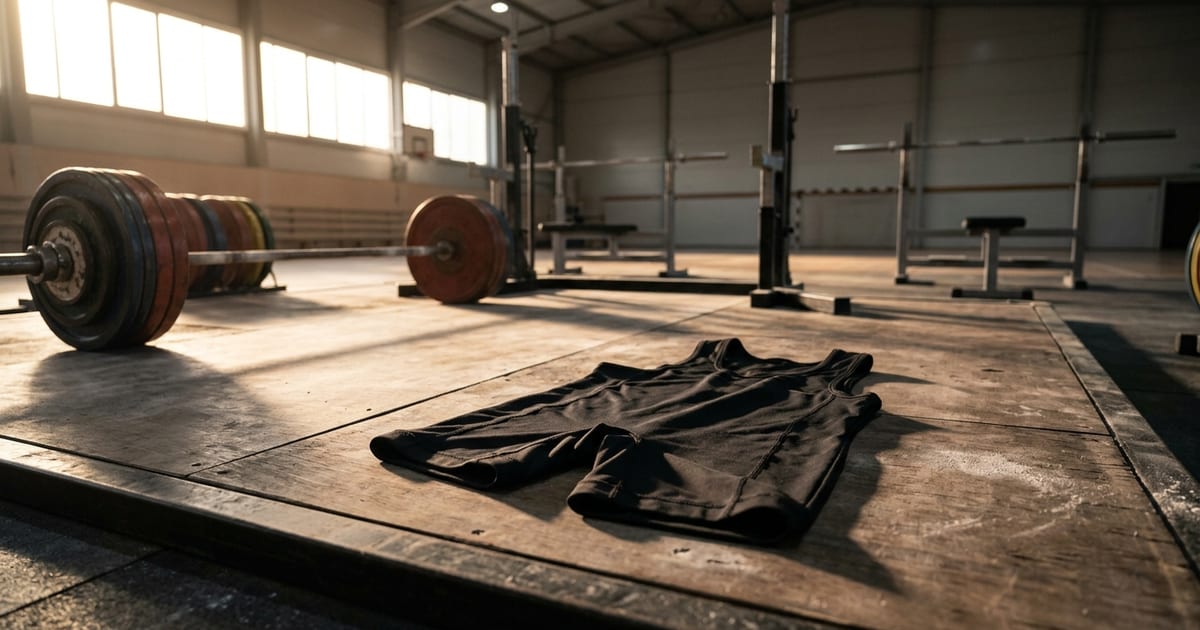
Powerlifting Singlet Sizing: How to Fit One Right
To size a powerlifting singlet correctly, go by your competition bodyweight, not your current weight, and expect a snug, compressive fit — not a comfortable one. For IPF-sanctioned meets, the singlet must also meet a specific leg length requirement: the leg must not extend more than 15cm above the middle of the kneecap. Get this wrong and you risk a costume check failure before you even touch the bar.
Why Singlet Sizing Feels Counterintuitive
Most lifters instinctively size up for comfort. With a singlet, that's the wrong call.
A well-fitted powerlifting singlet should feel tight across the torso and thighs when dry. The nylon-spandex blends used in most competition singlets have significant stretch — what feels restrictive on the hanger will move with you under load. Sizing up introduces excess fabric that can bunch, shift, or fail a judge's inspection.
How to Size a Powerlifting Singlet: Step by Step
1. Start with your competition weight class, not the scale today. If you're cutting to 83kg, size for 83kg. Most brands publish weight-based sizing charts. As an illustrative example only, a chart might look something like this:
- XS: lightest lifters
- S: light-middle range
- M: middle range
- L: upper-middle range
These bands are illustrative and not an official standard — actual cutoffs vary significantly by brand. Always size directly from the manufacturer's own published chart for the specific singlet you're buying.
2. Check the leg length against IPF rules. The current IPF Technical Rulebook specifies that the singlet leg length must not extend more than 15cm above the middle of the kneecap. Verify the exact wording in the current official rulebook, and if you're between sizes, use the leg length as your tiebreaker.
3. Consider the fabric weight for your sport. Powerlifters benefit from heavier, abrasion-resistant fabrics that stay in place during heavy squats and deadlifts. Weightlifters need more dynamic stretch and unrestricted shoulder mobility for the snatch and clean. Same garment category, different demands.
4. If in doubt, size down — not up. For raw powerlifting, a singlet that fits snugly is both legal and functional. Brands like A7 and SBD publish their own size charts covering a wide range — check each brand's chart for its exact available sizes.
IPF Approved Singlet: What the Rules Actually Require
Beyond fit, the IPF costume rules govern the singlet itself — including its construction and coverage. Note that these singlet rules are separate from supportive equipment: the difference between raw and equipped divisions is which supportive suits (squat/bench suits) are permitted, not whether the singlet itself provides support. Whichever division you compete in, verify your singlet appears on the current IPF approved list before competition day.
A7 and SBD singlets have appeared on IPF approved equipment lists in the past, but approved-list status is updated periodically and applies to specific models and colorways. Always confirm the exact item you plan to wear is currently approved for your 2026 meet.
Sizing for Training vs. Competition
For training, fit is more forgiving. Many lifters use a slightly looser singlet day-to-day and reserve their competition singlet for meet prep and mock meets. This also extends the life of the competition garment.
If you're tracking your training with Kenso, logging your sets, reps, weight, RPE, energy, and rest — and noting which sessions you wore your singlet in — gives you useful context as meet day approaches. Pair that with your Apple Health data for a fuller picture. Small details compound over a full training block.
2026 Singlet Picks Worth Considering
- A7 Singlet — seamless construction, reinforced gussets (confirm current IPF-approved colorways before buying)
- SBD Singlet — used across IPF federations, durable fabric (verify current approval status)
- Virus Performance Singlet — strong option for weightlifters needing dynamic stretch
Prices vary by retailer; check current listings before purchasing.
Getting It Right Before the Platform
Singlet fit is one of those details that feels minor until it isn't. A singlet that passes inspection, stays in place during a max squat, and fits your competition weight class is one less variable to manage on meet day. Size to your weight class, verify the leg length against the current rulebook, confirm IPF approval, and move on to what actually matters — the training.
Kenso is built for lifters who want to track that training with the same precision they bring to everything else. Log your sessions, monitor your progression, and let the data do the talking.
Download Kenso on iOS and start training with intention.
Frequently Asked Questions
Should I size up or down in a powerlifting singlet?
Size down if you're between sizes. A snug fit is both legal and functional for raw powerlifting. Singlet fabrics stretch significantly under load, so what feels tight dry will move correctly during a lift.
What is the IPF leg length rule for singlets?
The current IPF Technical Rulebook specifies that the singlet leg length must not extend more than 15cm above the middle of the kneecap. Check the current official rulebook for the exact wording, as costume specifications can be updated. Singlets that don't comply will fail a costume check.
Do I size a singlet to my current weight or competition weight?
Always size to your competition bodyweight. If you're cutting weight for a meet, buy for the weight class you're competing in — not where you are during the off-season.
Is there a difference between a powerlifting singlet and a weightlifting singlet?
Yes. Powerlifting singlets use heavier, abrasion-resistant fabrics for stability under maximal loads. Weightlifting singlets prioritize dynamic stretch and unrestricted shoulder mobility for overhead movements.
How do I know if my singlet is IPF approved?
Check the IPF's current approved equipment list on their official website before your meet. Brands like A7 and SBD have appeared on IPF approved lists, but colorways and models change and approval is updated periodically — always verify the specific item you're purchasing is currently approved.
This article contains affiliate links. We may earn a small commission at no extra cost to you.