
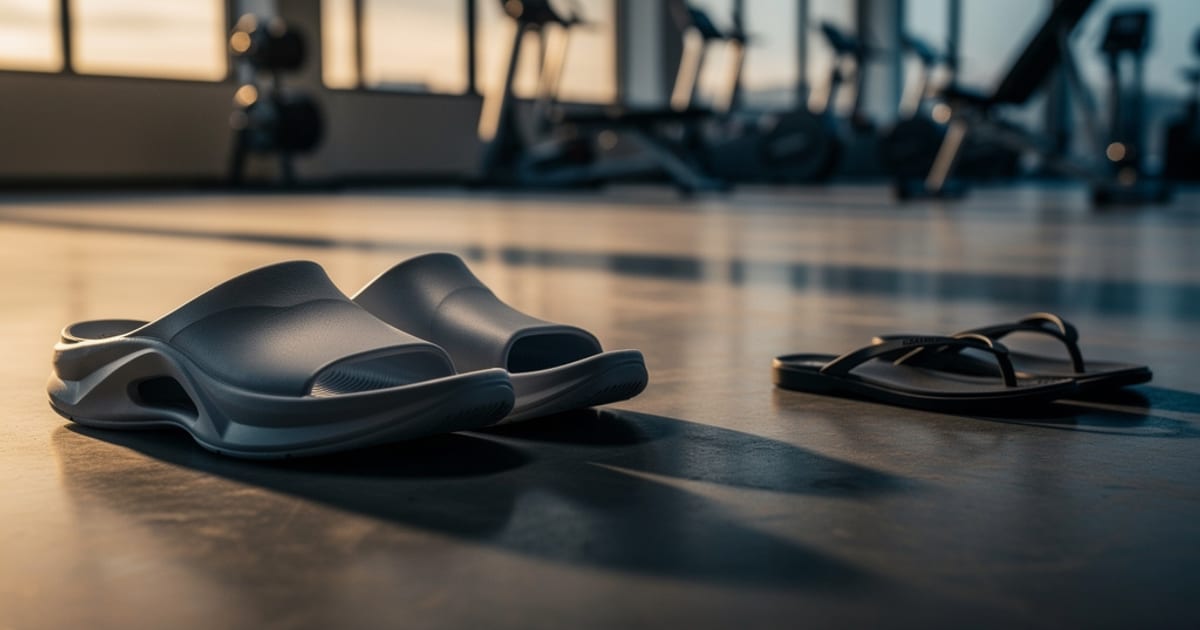
Recovery Slides vs Regular Sandals: The Clear Winner for Post-Workout Foot Health
Recovery slides generally beat regular sandals for post-workout foot health because they offer more cushioning and arch support, using thicker, softer foam designed to reduce foot fatigue after training. Unlike standard flip-flops or casual sandals built mainly for style, recovery slides are shaped to support your feet when they need it most—right after an intense session.
The difference comes down to design intention. Regular sandals prioritize style and basic comfort, while recovery slides focus on biomechanical support and impact absorption.
Why Recovery Slides Outperform Regular Sandals
Softer, thicker foam: Recovery slides often use proprietary foam compounds engineered to absorb more impact than the standard EVA found in regular sandals. Manufacturers point to their own testing for these claims, and independent results vary—but in practice the extra cushioning noticeably reduces the load on tired muscles and joints.
Targeted arch support: A contoured footbed cradles your arch and helps keep your foot aligned when it is fatigued from training. Regular sandals typically offer minimal to no arch support, leaving your feet flat against a thin sole.
Recovery-oriented materials: The thicker, more compliant midsoles in recovery slides are designed to ease pressure on the foot as you stand and walk after a workout, which many lifters find more comfortable than a flat sandal.
Top Recovery Slides for 2026
Here are the standout recovery slide options for 2026, based on widely reported user satisfaction and verified buyer feedback:
OOFOS OOahh Slides are praised for durability and comfort, offering arch support that lifters consistently rate highly. Their OOfoam material absorbs impact well while holding its shape over time.
Hoka Ora Recovery 3 Slides provide foot-cradling support with a wider platform that accommodates various foot shapes. The midsole geometry is built to support natural foot motion during recovery.
Pushpül Flex 3 Fitness Slides offer good foot-motion support, making them a solid pick for lifters who fold mobility work into their recovery routine.
When Tracking Your Training Matters
Just as Kenso helps you track progression in your lifts, paying attention to how your feet feel post-workout can inform your recovery gear choices. Watch your foot fatigue patterns—if you're consistently sore after leg days, quality recovery slides start to look like essential equipment rather than a luxury.
The investment in proper post-workout footwear pays off in everyday comfort between sessions. When you're training with intention, the small recovery details add up.
Does arch support in recovery slides really make a difference?
For many people, yes. Arch support helps keep the foot aligned when muscles are fatigued, which can reduce strain on the plantar fascia. How much it helps varies from person to person and depends on your foot shape.
How long should I wear recovery slides after workouts?
There's no fixed rule—wear them whenever your feet feel fatigued, often in the hours right after training. The cushioning tends to feel most useful during that initial post-workout window.
Are recovery slides worth the higher cost compared to regular sandals?
For frequent lifters, often yes. The thicker materials, arch support, and added cushioning can justify the cost if you train regularly and want more comfort afterward. For occasional wear, a regular sandal may be enough.
Can I wear recovery slides for daily activities?
Many people find recovery slides comfortable for casual daily wear. That said, they're optimized for short-term recovery comfort rather than extended walking or standing.
Do recovery slides help with plantar fasciitis?
Some users report less plantar fasciitis discomfort when wearing recovery slides, though results vary widely and this isn't a medical treatment. If you have persistent foot pain, see a podiatrist.
Ready to upgrade your post-workout routine? Download Kenso to track how your training consistency and recovery habits affect your progress over time.
This article contains affiliate links. We may earn a small commission at no extra cost to you.