
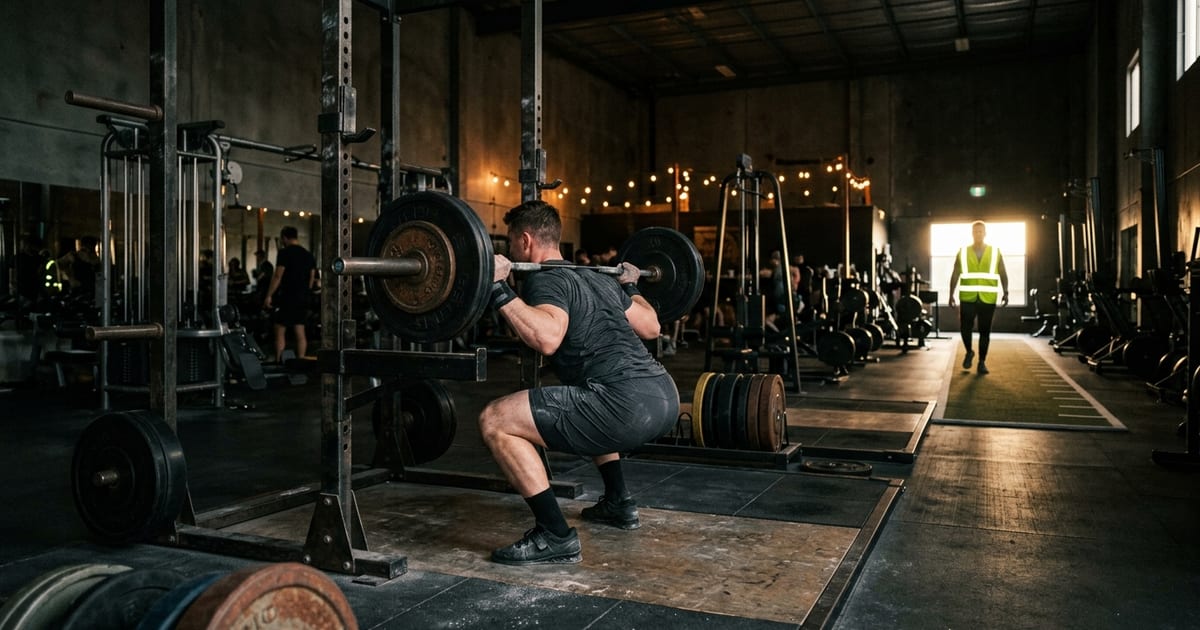
For indoor lifters, reflective gym clothes offer no meaningful safety benefit. Retroreflective material only works when a light source, like a car's headlights, shines toward it from near the viewer's eye, and a lit gym floor never creates that situation. What matters more indoors is the fabric's finish. Matte, textured fabric keeps a barbell from sliding on your upper back and won't glare in form-check video. Reflective gear is only worth it if you walk, run, or cycle to the gym in the dark.
What High-Visibility Workout Gear Is Built to Do
High-visibility workout gear uses two separate technologies, and the distinction matters:
- Fluorescent fabric (neon yellow, orange) stands out in daylight and dusk.
- Retroreflective material (glass beads or micro-prisms) bounces light back toward its source, which makes you visible to drivers at night.
Certified workwear under EN ISO 20471 or ANSI/ISEA 107 requires both, in specified amounts and placements. Reflective strips on gym wear are usually a small logo or piping. That's enough to help a driver notice you, but it is not certified high-vis.
Indoors, neither technology is doing anything. The people sharing your platform can already see you.
Matte vs Reflective Activewear: Where Finish Actually Matters
The more useful question for lifters is matte versus slick. Fabric finish affects your training in two concrete ways.
Bar Grip on Your Back
Large reflective or glossy heat-transfer prints across the shoulders create a slick surface. On a low-bar or high-bar squat, that can let the bar creep down your back over a heavy set. That changes your bar path and costs you reps. Brushed cotton blends and textured performance knits hold the bar better.
Form-Check Video
Retroreflective panels return light straight back toward the camera. If you film your sets with a phone flash or a ring light near the lens, reflective patches can blow out as bright spots. They can also pull your phone's auto-exposure off your bar path. Matte fabric films cleanly.
A Practical Setup for Lifters
- Train in matte fabric. Choose a cotton-blend or textured shirt with no large prints across the upper back.
- Keep reflective gear for the commute. If you run or walk to the gym before sunrise, use a dedicated layer. The Noxgear Tracer2 vest and the Proviz Reflect 360 Jacket are strong options, and the Proviz Reflective Short Sleeve Training Top covers warmer months.
- Add lights for low light. The Amphipod Micro-Light Flashing Arm and Ankle Bands add active light, which helps in conditions where reflection alone falls short.
- Take the outer layer off before you squat. A reflective jacket worn under the bar has the same slipping problem as a glossy print.
How This Fits Into Your Training Log
If a squat set stalls because the bar slid, that miss reflects your setup, not your strength. Before adjusting load, ask the Kenso AI coach whether a missed squat set fits your recent trend.
The Bottom Line
High-visibility fabric solves a road-safety problem, and that problem stays outside when you walk into the gym. Choose your training clothes for friction, mobility, and clean video. Save reflective gear for the trip there and back. Kenso's progression engine assumes your logged reps reflect your real capacity. Removing equipment variables like a slipping bar keeps that data honest, so the increases Kenso suggests are based on strength, not luck.
Track every session with intention. Download Kenso on iOS to log your lifts, follow rule-based progression, and get coaching grounded in your own training history.
Frequently Asked Questions
Do reflective gym clothes improve safety indoors?
No. Retroreflective material needs a directed light source near the viewer, such as headlights, to work. Under normal gym lighting, it provides no added visibility or safety.
Can reflective strips on gym wear affect lifting?
They can. Large glossy or reflective prints across the upper back may let a barbell slide during squats. Small logos or piping are rarely a problem.
Is fluorescent gym apparel the same as reflective gear?
No. Fluorescent fabric is most visible in daylight and dusk, while retroreflective material is most visible at night under headlights. Certified high-vis garments combine both.
What should I wear if I commute to the gym in the dark?
Wear a dedicated reflective layer, such as a vest or jacket, and consider adding active lights. Remove the layer before training under the bar.
This article contains affiliate links. We may earn a small commission at no extra cost to you.