
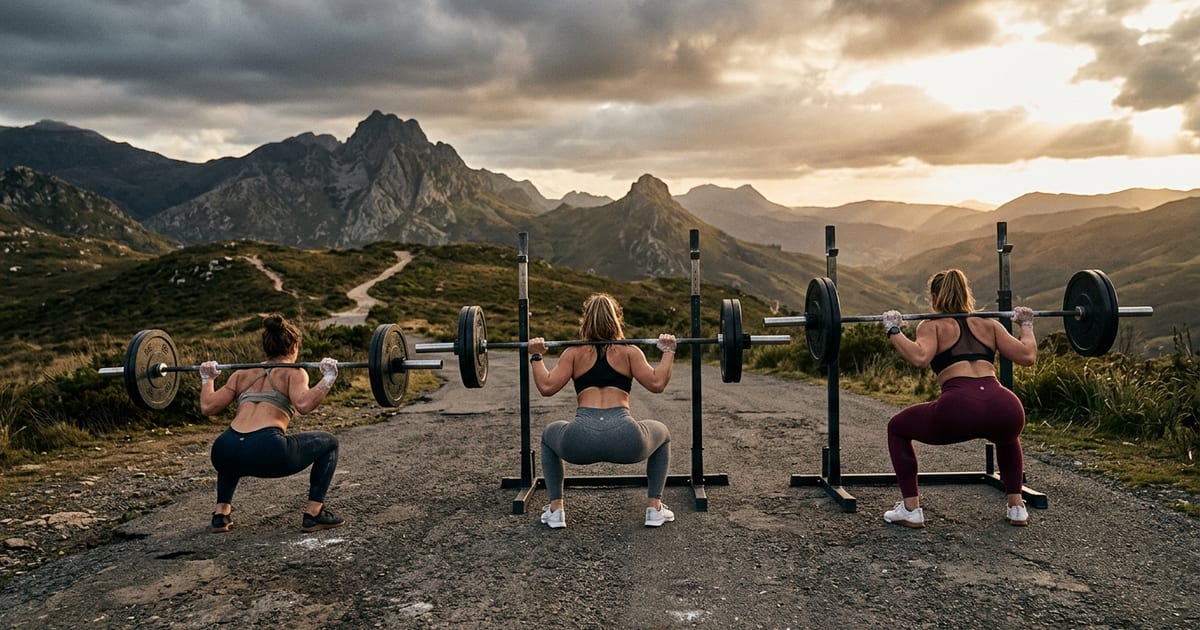
How to Choose the Right Waistband Height for Squats: Low-Rise vs Mid-Rise vs High-Rise Gym Pants
For squats specifically, high-rise gym leggings are the most reliable choice. A waistband that sits 2–3 inches above the navel stays anchored under load, doesn't roll or slide during the descent, and provides light compression across the lower back. If you're training through a structured program, mid-rise can work for moderate loads, but low-rise is generally too unstable for heavy barbell work.
Why Waistband Height Actually Matters for Squats
When you descend into a squat, your torso angle shifts, your hips hinge, and the fabric around your waist experiences real mechanical tension. A waistband that sits too low—typically below the hip bone—has no skeletal structure to anchor against. It migrates. You end up adjusting between sets instead of focusing on the next rep.
High-waist designs have become a staple in the gym apparel space—not as a passing fashion trend, but reflecting what many lifters have learned through experience.
Breaking Down Each Rise for Squats
Low-Rise (sits at or below the hip bone)
Low-rise waistbands typically sit 1–2 inches below the navel. They're fine for accessory work, stretching, or light cardio. Under a loaded squat, though, the waistband has nothing to grip. Expect it to slide toward your hips by set three.
Best for: Mobility work, light accessory movements, lifters who find higher rises genuinely uncomfortable.
Not ideal for: Back squats, front squats, Romanian deadlifts, or any movement where your torso changes angle under load.
Mid-Rise (sits at or just below the navel)
Mid-rise sits roughly at the navel—usually 1 inch below to 1 inch above. This is the most versatile option. It stays put during moderate-intensity sessions and doesn't feel restrictive for conditioning work or running.
For heavy squats, mid-rise is workable if the waistband has a wide, structured band (at least 3 inches) and a quality elastic that doesn't stretch out over time. Thinner mid-rise bands are the most likely to roll during a deep squat.
Best for: Mixed training sessions, lifters who alternate between lifting and cardio, moderate-load squat programs.
Watch for: Waistband width. A narrow mid-rise band behaves more like a low-rise under load.
High-Rise (sits 2–3 inches above the navel)
This is the most squat-friendly option. The waistband anchors above the iliac crest—the upper edge of the pelvis—which gives it a structural ledge to sit against. It doesn't slide because anatomy is working with it, not against it.
High-rise also provides mild compression across the lower back. Some lifters report that this feels supportive during heavy compound movements—though it's not a substitute for a proper lifting belt at maximal loads.
Best for: Back squats, front squats, deadlifts, any session with heavy compound work.
Watch for: Waistband material. Thick, double-layered high-rise bands compress without digging in. Thin ones can fold or cut in at the top.
A Quick Decision Framework
- Heavy squat day (80%+ of 1RM): High-rise, wide waistband, structured fabric
- Moderate strength session: Mid-rise with a 3-inch+ band
- Conditioning or accessory-only day: Mid-rise or low-rise, your preference
- Mixed session (lifting + cardio): Mid-rise is the practical compromise
Products Worth Considering in 2026
For high-rise squat pants, the Gymshark Vital Seamless High-Waisted Leggings and Lululemon Align High-Rise Pant are consistently well-reviewed for structured waistband performance. For mid-rise, the CRZ Yoga Naked Feeling Mid-Rise Leggings offer a reliable band without the full compression of a high-rise.
Product names and prices are accurate as of publication and are subject to change—confirm current model names and pricing against the retailer's live listing before buying.
Tracking What Works for You
Equipment choices affect training more than most lifters realize. If you're logging your squat sessions consistently—tracking load, rep quality, and RPE—you'll notice patterns. A session where you spent two sets adjusting your waistband is a data point worth noting.
Kenso's iOS training logger lets you add session notes alongside your sets and reps, so you can track variables like this over time. Small details compound. Kenso's rule-based progression engine is built on that exact principle: consistent, intentional tracking leads to better decisions, whether that's about load selection or what you're wearing when you lift.
The Bottom Line
Choose your waistband height based on the demands of the session, not just comfort in the changing room. High-rise is the most reliable option for squats because it works with your anatomy under load. Mid-rise is a reasonable compromise for mixed training. Low-rise belongs on the accessory rack, not under a barbell.
When in doubt, train in what stays put—then track what happens.
Start logging your sessions with intention. Download Kenso on iOS and track every set, note, and progression in one place.
Frequently Asked Questions
What is the best waistband height for squats?
High-rise is the best waistband height for squats. A waistband sitting 2–3 inches above the navel anchors against the iliac crest and stays in place under load, unlike mid-rise or low-rise options that tend to slide during the descent.
Does waistband height affect squat performance?
It can. A waistband that slides or rolls mid-set creates a distraction and interrupts your focus between reps. For heavy compound movements, a stable high-rise waistband removes one variable from the equation.
Can I wear low-rise leggings for squats?
Low-rise leggings can work for light or moderate loads, but they're generally unreliable for heavy barbell squats. Without a structural anchor point above the hip bone, the waistband tends to migrate downward during the movement.
Is mid-rise or high-rise better for a mixed training session?
Mid-rise is the more practical choice for sessions that combine lifting with cardio or conditioning. It offers enough stability for moderate loads without the full compression of a high-rise waistband.
What should I look for in a squat-friendly waistband besides rise height?
Look for a wide band (at least 3 inches), double-layer or structured fabric, and a high-quality elastic that doesn't stretch out over repeated washes. Thin single-layer waistbands—even at high-rise—are more prone to rolling under load.
This article contains affiliate links. We may earn a small commission at no extra cost to you.