
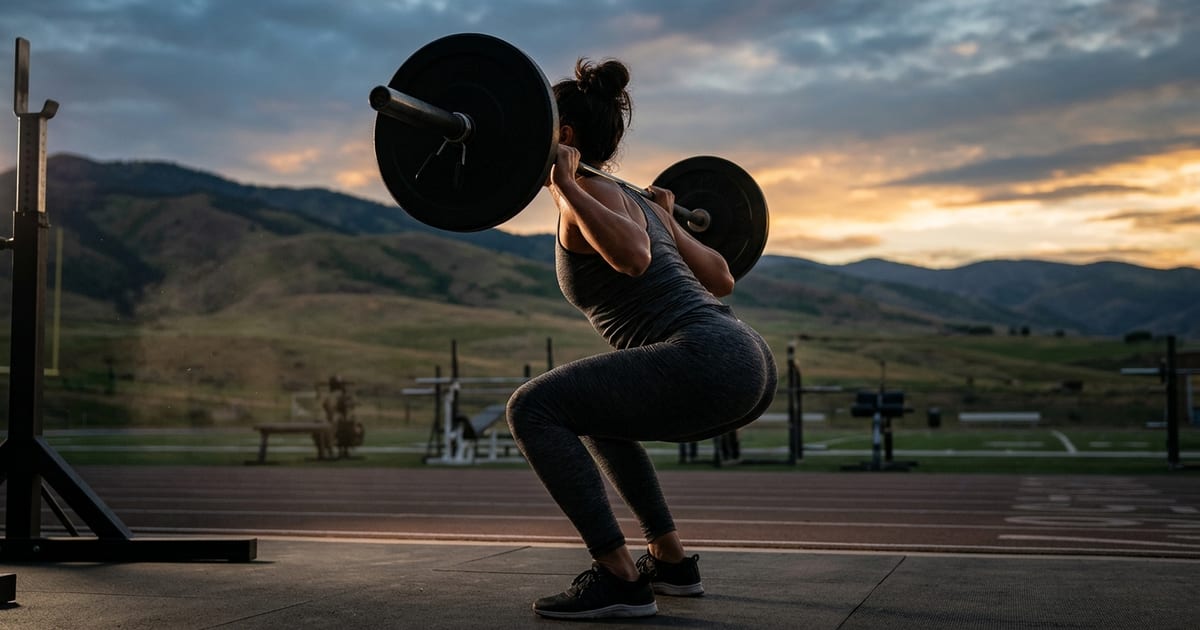
What Makes Leggings Actually Squat-Proof?
Squat-proof leggings stay opaque through dense fabric construction, a tight knit pattern, and high-performance material blends that resist becoming sheer when stretched. The core requirement is fabric thick enough and tightly knit enough that the weave stays closed during deep squats and other demanding movements — so the material extends without thinning out at the glutes and thighs.
When you're tracking your training sessions and pushing for progressive overload, the last thing you want to worry about is whether your gear will hold up. Knowing what actually makes leggings squat-proof helps you invest in pieces that perform as hard as you train.
The Science Behind Opacity
Opacity comes down to fabric density and construction. Squat-proof leggings use tightly knit materials that hold their structure under stress. Thinner fabrics stretch and become transparent at the point of greatest tension; denser knit construction keeps the weave tight even when the fabric is fully extended.
High-performance blends like nylon-spandex pair stretch with strong recovery. They return to their original shape after stretching, which keeps coverage consistent from your first warm-up set to your last working set.
Key Features That Matter
Fabric Weight and Thickness: Look for substantial fabric weight. Heavier materials naturally provide better coverage and resist becoming see-through under tension.
Compression Fit: A proper compression fit keeps the fabric close to your body, reducing the stress points that lead to transparency.
Four-Way Stretch: Quality four-way stretch moves with your body in every direction without thinning at the glutes and thighs.
Testing Your Leggings
Before committing to new gear, run a simple squat test. Put the leggings on and do a few deep squats in front of a mirror. Check for any transparency around the glute and thigh areas. If you can see through the fabric at the bottom of the squat, they won't hold up during serious training.
Many lifters using Kenso to track their progression prefer leggings that can handle multiple sessions per week without losing their opacity or shape.
Top Performers for 2026
The Gymshark Vital Seamless 2.0 Leggings consistently rank among the best for opacity and durability. Their dense construction handles deep squats without compromising coverage.
The Girlfriend Collective Compressive High-Rise Leggings deliver strong opacity through a recycled polyester blend, and the compression fit keeps coverage consistent through movement.
For a sculpting option, the Spanx Booty Boost Active Leggings use Spanx's FlexAppeal performance fabric to hold opacity while providing shaping support.
The Bottom Line
Truly squat-proof leggings come from prioritizing fabric quality over trendy designs. Dense construction, a proper compression fit, and high-performance materials make your gear support your training instead of distracting from it. Run the mirror test before you buy, and a single quality pair will outlast several cheaper ones.
Ready to train with confidence? Download Kenso to track your progression while wearing gear that performs as consistently as you do.
What fabric blend is best for squat-proof leggings?
Nylon-spandex blends typically offer the best combination of opacity, stretch, and recovery for squat-proof performance.
How thick should squat-proof leggings be?
Look for leggings with substantial fabric weight and dense knit construction rather than focusing on a single thickness measurement.
Do compression leggings stay more opaque?
Yes — a proper compression fit helps maintain fabric structure and reduces the stress points that cause transparency.
How can I test if leggings are truly squat-proof?
Perform deep squats in front of a mirror while wearing them and check for any see-through areas around the glutes and thighs.
Do expensive leggings always mean better opacity?
Not necessarily. Focus on fabric construction and performance features rather than price alone when choosing squat-proof leggings.
This article contains affiliate links. We may earn a small commission at no extra cost to you.