
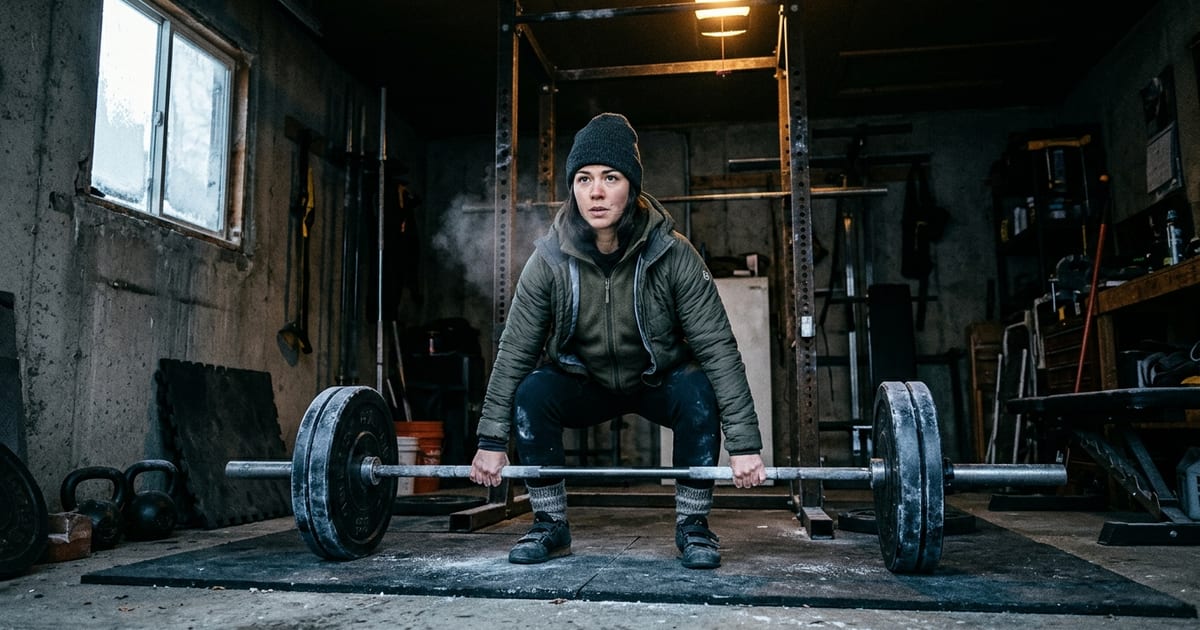
In a cold garage gym below 50°F, wear three layers: a moisture-wicking synthetic or merino base layer, a fleece midlayer, and a full-zip hoodie or light jacket. Keep your head and feet covered all session, and wear gloves only between sets. Remove layers as your body warms up, and put the outer layer back on during rest periods so you don't cool down between work sets.
Most advice about what to wear in a cold garage gym focuses on the warm-up. The harder problem is the rest period. Three minutes between heavy sets is long enough to lose the warmth you built, so plan your clothing around the rests.
The Three-Layer System for Garage Gym Winter Training
Base layer: move sweat off your skin
Avoid cotton next to your skin. It holds sweat and chills you once you stop moving. Good options:
- Under Armour Men's ColdGear Armour Compression Mock (around $55)
- Smartwool Men's Classic Thermal Merino Base Layer Crew (around $100), which resists odor across multiple sessions
Midlayer: insulation you'll remove
A fleece midlayer or thermal long sleeve holds heat during warm-up sets. Most lifters take it off by their second working set.
Outer layer: your rest-period jacket
A full zip matters here. You need to get the layer on and off in seconds without pulling it over your head. The Champion Men's Powerblend Fleece Full Zip Hoodie (around $45) works well. Below about 35°F, the ORORO Men's Heated Vest (around $130) keeps your torso warm between sets without restricting your arms.
Extremities: Head, Hands, and Feet
- Head: Wear a Carhartt Men's Knit Cuffed Beanie (around $20) for the whole session.
- Feet: Concrete floors draw heat from your feet steadily. Darn Tough Hiker Micro Crew Midweight Cushion socks (around $27) help a lot.
- Hands: Wear gloves between sets, then take them off for heavy pulls. Gloves add thickness between your hand and the bar and can weaken your grip. Use chalk, because cold, dry hands still slip.
A Layer-Shedding Schedule for Training in an Unheated Gym
- General warm-up (5–10 min): Wear all three layers plus the beanie. Do rowing, jump rope, or bodyweight circuits.
- Ramp-up sets: Remove the midlayer. Add one or two extra warm-up sets beyond what you'd do indoors.
- Working sets: Train in your base layer. Put the outer layer back on as soon as you rack the bar.
- Accessories: Shorter rests mean you can usually leave the outer layer off.
Research consistently suggests that muscle temperature affects force and power output. Those extra ramp-up sets are part of training well in the cold, not lost time.
How This Fits Into Your Training Log
Winter can quietly flatten your top sets. If your numbers stall from November to February, ask the Kenso AI coach whether cold-month sessions are holding back your progression. It reviews your actual training history.
Consistency Through the Cold Months
The lifters who come into spring stronger are usually the ones who kept showing up through January. Good layers take away one more reason to skip a session. Kenso's progression engine treats every logged session the same way, so a cold week stays part of a continuous record instead of becoming a gap.
FAQ
Should you wear gloves when lifting in a cold garage?
Wear them between sets and during light warm-ups. Take them off for heavy barbell work to keep a direct grip, and use chalk.
How long should you warm up in a cold gym?
Plan on 5–10 minutes of general movement, then one or two more ramp-up sets than you'd normally do before your working weight.
Is cotton okay for garage gym winter training?
Cotton is fine as an outer layer. Avoid it as a base layer, because it holds sweat and chills you during rest periods.
Does cold weather affect lifting performance?
Research consistently suggests that colder muscles produce less force and power. A longer warm-up and staying warm between sets help limit the effect.
What temperature is too cold to lift in a garage?
There is no fixed cutoff. Below 35°F, consider heated gear, longer warm-ups, and a beanie and outer layer for the full session.
Cold-weather training takes more preparation, but it doesn't have to break your progression. Dress in layers, shed them on a schedule, and log every session in Kenso so your winter work counts toward the long term.
This article contains affiliate links. We may earn a small commission at no extra cost to you.