
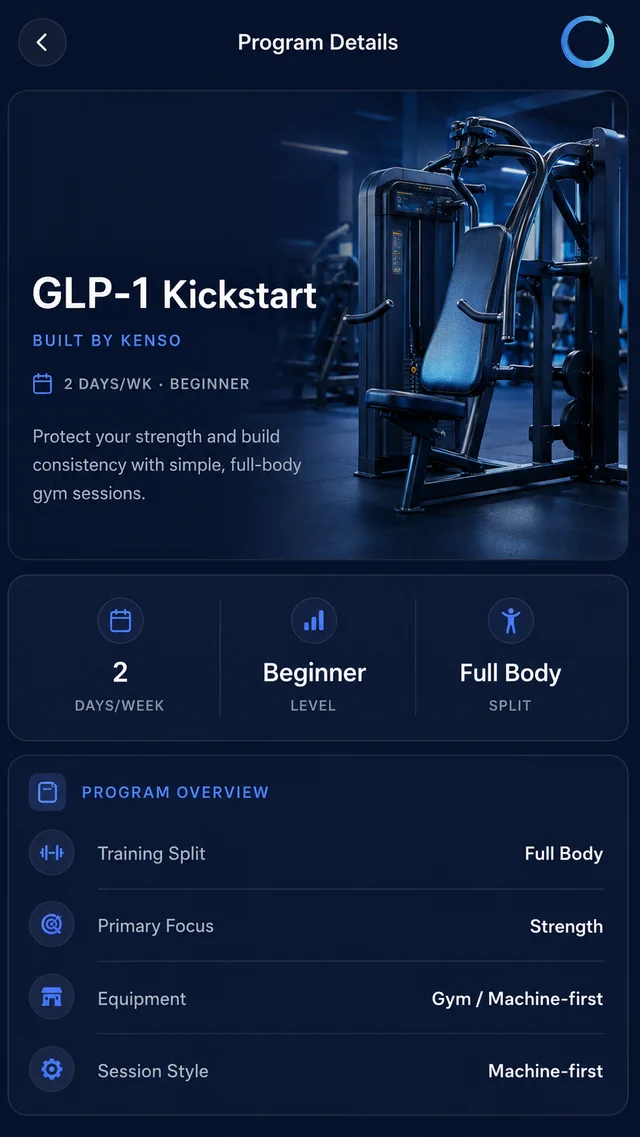
GLP-1 Kickstart
Two simple machine-first gym sessions a week to protect your strength and build the habit — the lowest-commitment way to make sure the weight you lose is fat, not muscle.
A large share of the weight lost during rapid weight loss is lean mass. Resistance training is the single biggest lever on whether that happens to you.
In the major weight-loss trials, roughly a quarter to 40 percent of what participants lost was lean mass rather than fat. That is not unique to medication — it is what any large, fast deficit does to an untrained body. The other half of the evidence is just as consistent: people who lift through a deficit and eat enough protein keep dramatically more muscle. Training is what decides which version you get.
Most programs are written for someone eating enough to grow, chasing more weight on the bar every week. That plan breaks on a deficit — your loads stall, it feels like failure, and the program keeps pushing anyway. These run the other direction: enough volume to keep every muscle, joint-friendly movements you can do on low energy, and progression that eases off instead of digging deeper.
Same weekly work, packaged for the energy and equipment you actually have. Every one runs eight weeks and starts light for the first two.
Two simple machine-first gym sessions a week to protect your strength and build the habit — the lowest-commitment way to make sure the weight you lose is fat, not muscle.
Three balanced full-body gym sessions a week — the structure used in every clinical muscle-preservation protocol. Protect strength, build energy, keep every muscle covered even when a day slips.
Four upper/lower gym sessions for when your energy is back and you want to add strength, not just keep it. RPE-guided main lifts adjust the load to the day you're actually having.
Three full-body dumbbell sessions you can do in your living room. Everything a clinical home-training protocol needs — a pair of dumbbells and 40 minutes.
Five 15–20 minute dumbbell mini-sessions, Monday to Friday. Nothing exceeds your energy budget, a missed day barely dents the week, and no session needs a makeup.
| Program | Best for | Days / week | Split | Level | Equipment |
|---|---|---|---|---|---|
| GLP-1 Kickstart | Starting from zero, or a schedule that only allows two days | 2 | Full Body | Beginner | Gym · machines |
| GLP-1 Foundation | The default pick — every muscle covered, three days a week | 3 | Full Body | Beginner | Gym · machines + dumbbells |
| GLP-1 Build | Energy is back and you want to add strength, not just hold it | 4 | Upper/Lower | Intermediate | Gym · full equipment |
| GLP-1 Home | No gym, and you would rather train in longer blocks | 3 | Full Body | Beginner | Home · dumbbells only |
| GLP-1 Daily | Low energy days — nothing longer than 20 minutes | 5 | Full Body | Beginner | Home · dumbbells only |
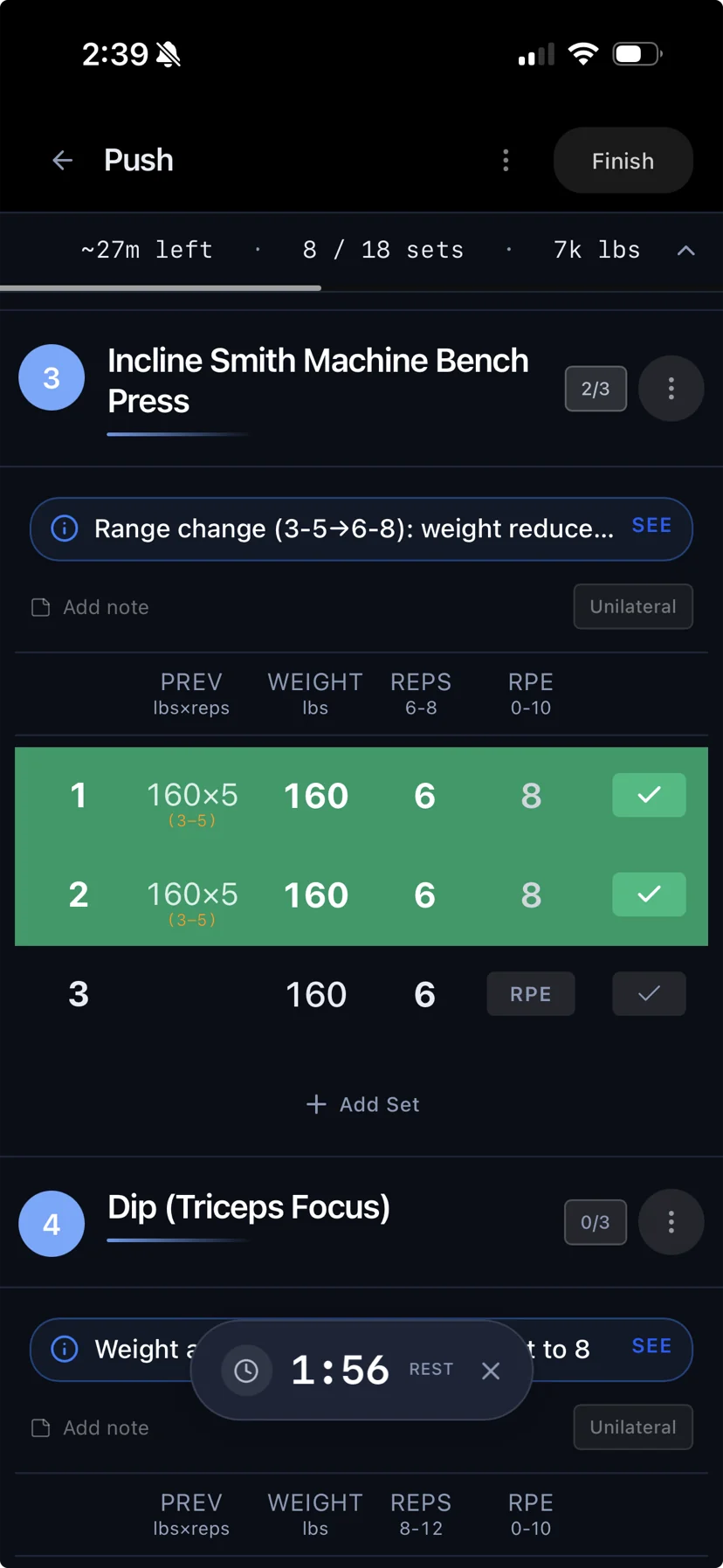
Log your sets and the app moves your loads and reps for you. On a deficit it holds steady or backs off instead of pushing you into a hole — the same logic a good coach would apply if they were watching every session.
Starting one of these programs puts the training engine into a mode built for a deficit: more forgiving targets, earlier deloads, and a weekly review that counts a held bench press as progress rather than a plateau.
Low energy is a feature of this process, not a personal failing. Every session has a shorter version, and the coach will tell you which sets to cut instead of watching you skip the whole thing.
Three steps, then the app carries the plan for you.
Choose the one that matches the time and equipment you have this month. Switching later keeps your history.
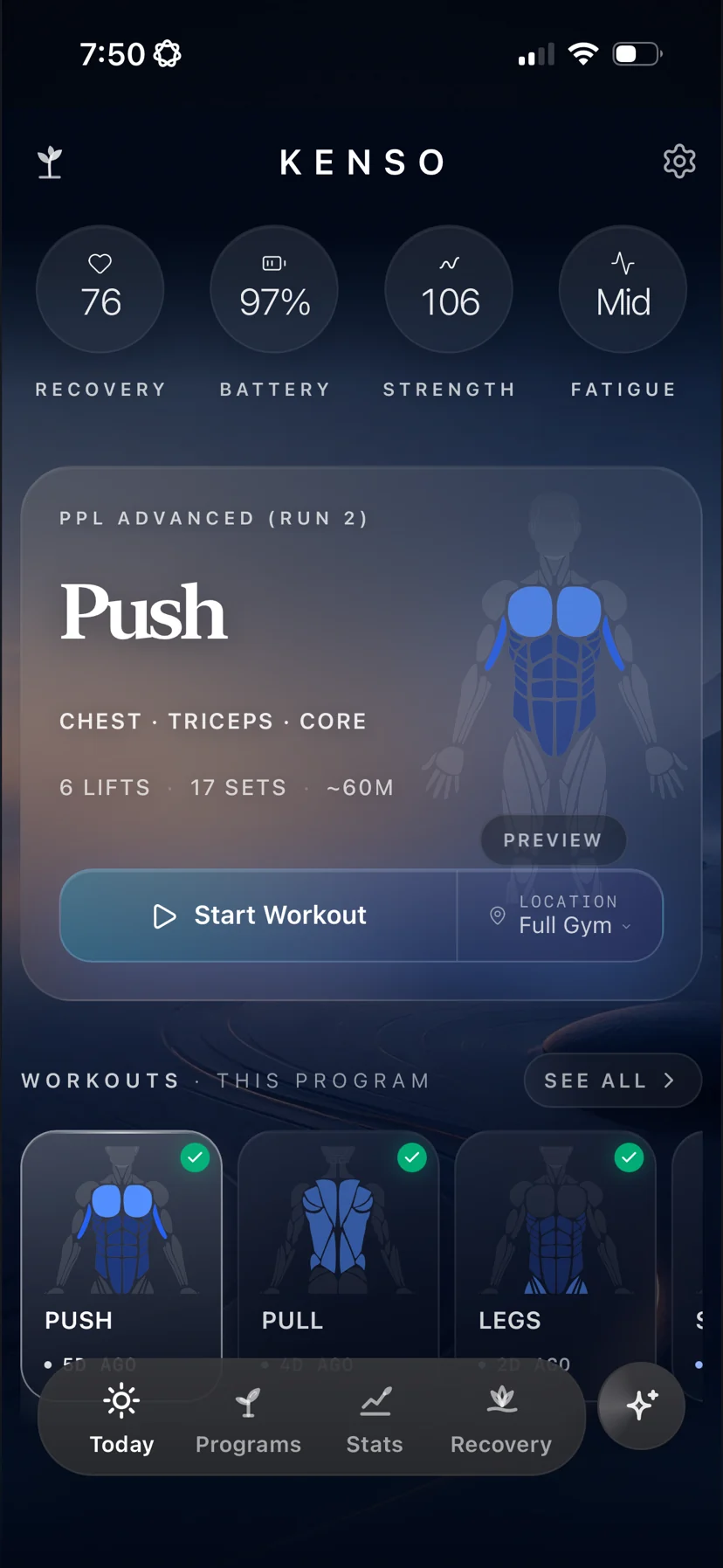
Tap through the session. Every set, rep, and weight is saved, so nothing rests on remembering last time.
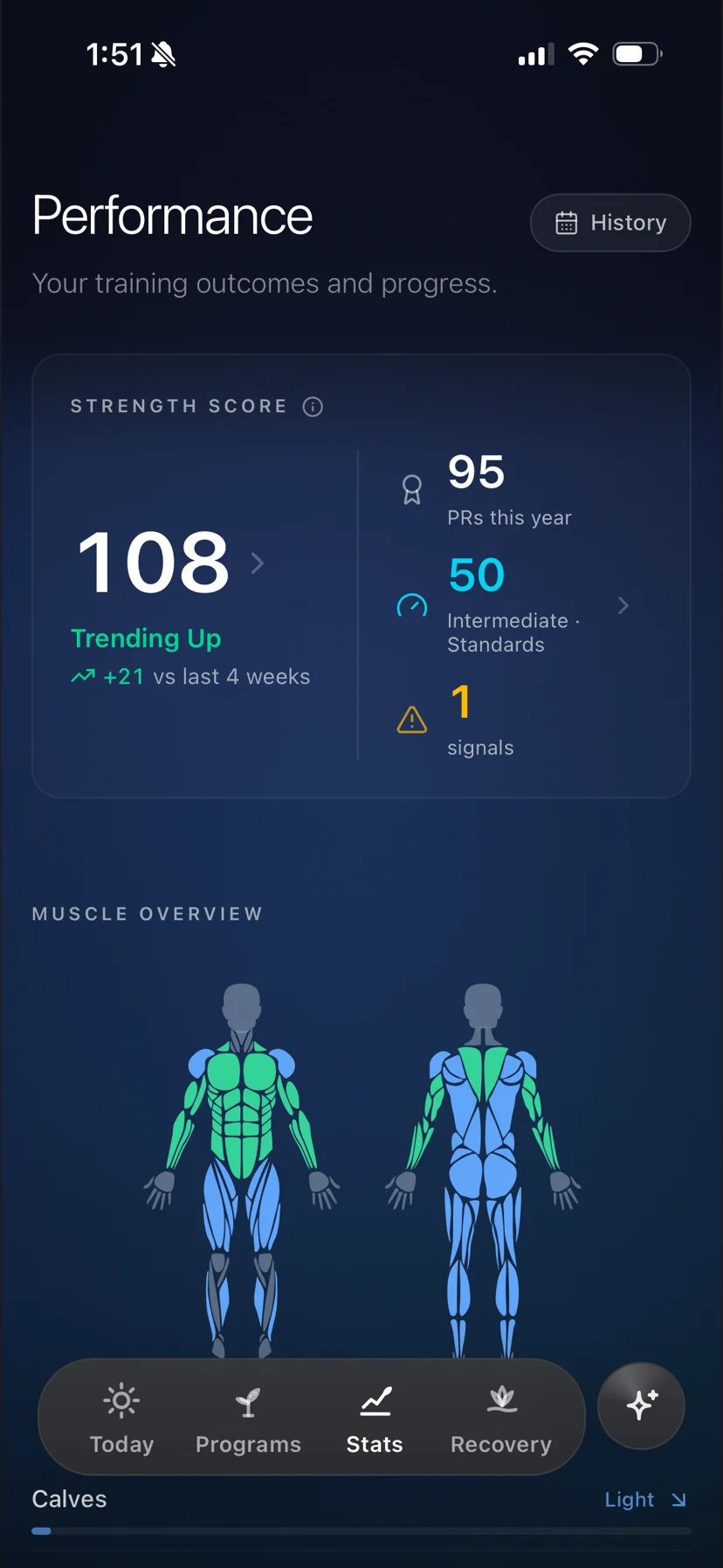
Targets for next time follow what you just did — heavier when you earned it, steady when you did not.
Some, if you do nothing about it. Across the major trials, roughly 25 to 40 percent of total weight lost was lean tissue — similar to what happens with any large calorie deficit. Studies pairing weight loss with structured resistance training cut that lean-mass loss substantially, and participants who also ate adequate protein preserved the most.
Two to four sessions a week covers it. Research on training frequency is clear that what matters is your total weekly work, not how you slice it — so two 40-minute full-body sessions and five 15-minute ones can produce the same result. Pick the shape you will actually complete.
Weights, if you have to choose. Cardio burns calories but does very little to tell your body to keep muscle; resistance training is the signal that protects it. Keep walking for health and general activity, but do not let cardio replace your lifting sessions.
Most guidance for people training during weight loss lands between 1.2 and 1.6 grams per kilogram of body weight per day, spread across meals. That is genuinely hard when your appetite is suppressed, which is why protein-first meals and shakes are the usual practical answer.
Shrink the session instead of skipping it. Cut your sets in half, keep the same movements, and go lighter. A short session preserves the habit and most of the muscle-protecting signal; a skipped week costs you both. The programs are built with this in mind, and Kenso will suggest the shorter version.
No. Two of the five programs need nothing but a pair of dumbbells and a floor, and the home-based protocols used in the research were built the same way. The gym versions exist because machines are easier on the joints and simpler to learn if you have access to them.
The Kenso app is free to download and includes workout logging, your training history, and progress tracking. The GLP-1 series is part of Kenso Pro, which also unlocks automatic weight progression, the AI coach, and recovery tracking.
Download Kenso, pick the program that fits your week, and log your first session today.
Kenso is a fitness app, not a medical service. Nothing here is medical advice, and we have nothing to say about your medication — dosing, timing, side effects, and whether to start or stop are conversations for you and your prescriber. What we know about is training.