
Articles
Training insights and progression strategies.

What Is Training Monotony and Why Does It Raise Injury Risk?
Doing the same workout every week doesn't just stall progress — it measurably raises your injury risk. Learn how to calculate your training monotony score and u

Casein vs Whey Before Bed: Which Protein Wins?
Both casein and whey are effective proteins, but for pre-sleep use, casein's slow digestion gives it a clear structural advantage. Here's what the evidence actu
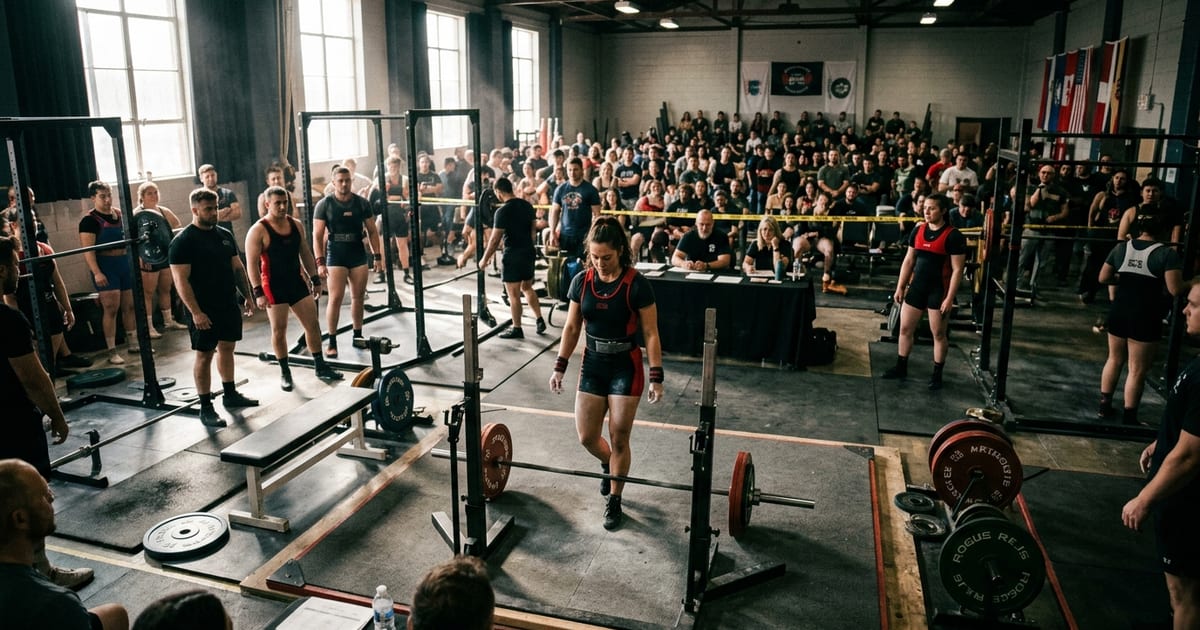
Powerlifting Singlet Rules: What to Wear at a Sanctioned Meet
Compression shorts and a fitted shirt won't cut it on the platform. Here's what the rulebook actually requires — and how to show up ready.

Bilateral Deficit Explained: Why Single-Leg Strength Doesn't Add Up
Your single-leg squat numbers look impressive on paper, but they don't add up the way you'd expect when you go bilateral. Here's the neuroscience behind why — a

Post-Activation Potentiation: Do Heavy Singles Work?
A heavy single before your working sets isn't just a confidence move — it's a measurable neurological strategy. Here's how PAP works and how to apply it.

Forced Reps Explained: When They Build Muscle vs. Ego
Forced reps can extend productive training volume past failure—but only under specific conditions. Here's how to use assisted reps to drive hypertrophy without

How Much Protein Per Meal Maximizes Muscle Protein Synthesis?
The answer isn't just 'eat more protein.' There's a dose threshold, a ceiling, and a distribution strategy that actually moves the needle.

How to Read a Workout Program as a Beginner
Workout programs look like a foreign language at first. Here's how to decode the notation, understand what you're actually being asked to do, and start training

How to Choose Waistband Height for Squats: Rise Guide
The wrong waistband height can interrupt a heavy squat set. Here's a practical guide to choosing between low-rise, mid-rise, and high-rise gym pants based on ho

How to Build a 4-Day Training Program That Works
Four days is enough to build real strength and muscle — if the structure is right. Here's how to design a 4-day program that holds up over months, not just week

Sunk Cost Fallacy in Fitness: When to Quit a Bad Program
Staying in a program that isn't working because you've already invested weeks into it isn't commitment — it's the sunk cost fallacy. Here's how to recognize it

Push Pull Legs Frequency: How Many Times Per Week?
PPL can be run 3 to 6 days per week, but the right frequency depends on your training age, recovery capacity, and schedule. Here's how to find yours.
One research breakdown a week.
The study, the effect size, what it actually means for your training. No fluff. No spam. Unsubscribe in one click.